
About All ToursAnd Pompeii ToursPompeii from Naples ToursFrom Sorrento ToursFrom Naples ToursPompeii From Rome Tours Directions Hours & Fees Guides
Find Tours 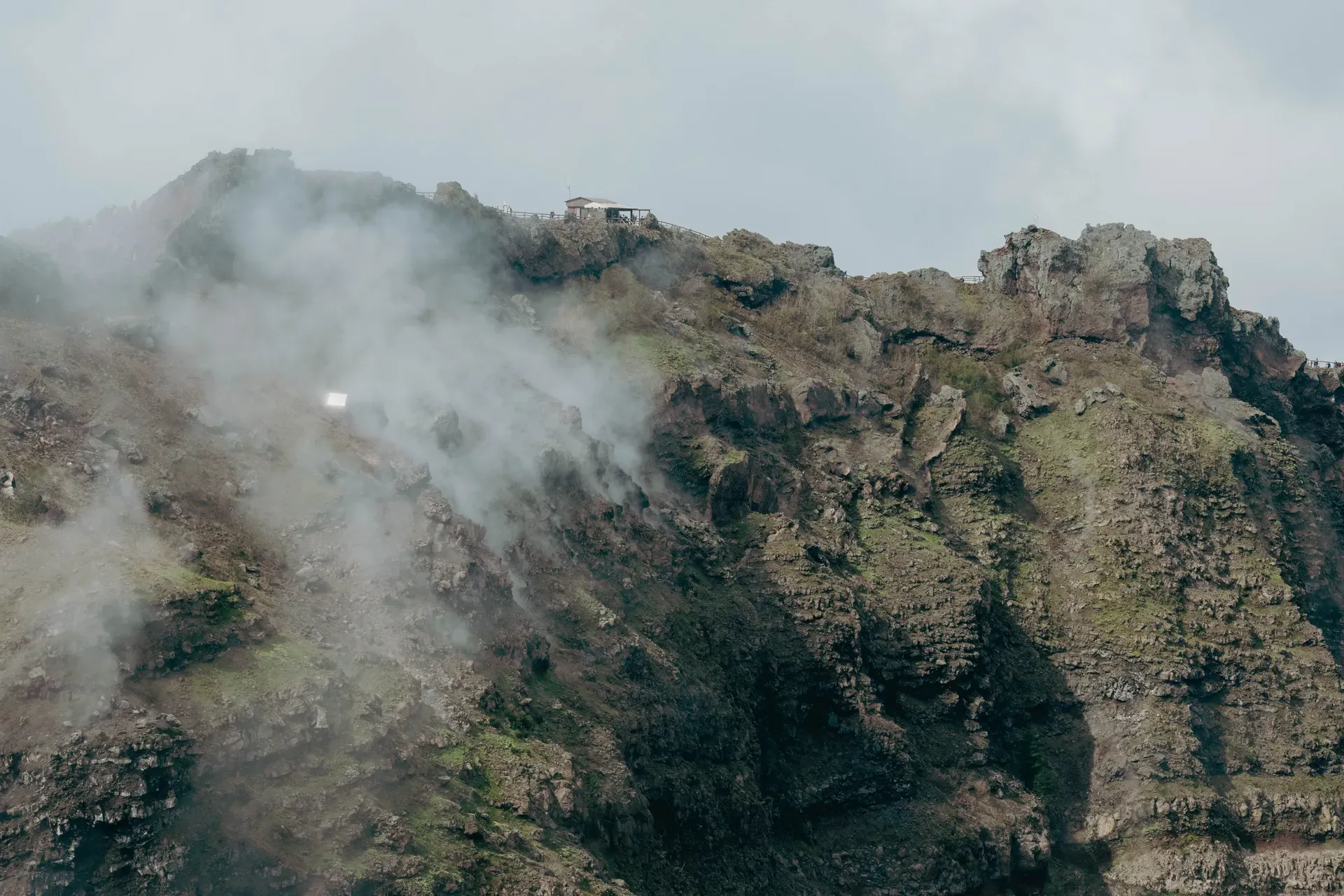
Explore the volcanic landscape of Mount Vesuvius with guided hikes to the crater or horseback rides through the national park. Many itineraries combine your mountain trek with skip-the-line access to the ancient ruins of Pompeii and Herculaneum.
 Free Cancellation
 Walk through Pompeii's ruins and choose between a crater hike or a geologist-led tour on Mt. Vesuvius.
 Free Cancellation
 Tour Pompeii’s ruins with an archaeologist and hike to the Great Cone of Mt. Vesuvius for views across the bay.
 Free Cancellation
 Tour the ruins of Pompeii for 2.5 hours and climb to the crater of Mount Vesuvius.
 Free Cancellation
 Visit the ruins of Herculaneum and Pompeii with a hike to the Vesuvius crater on this full-day tour from Naples.
 Free Cancellation
 Tour Pompeii’s ruins with a local guide, eat at a Vesuvius vineyard, and ride horses 500 meters up the volcano.
 Free Cancellation
 Walk through Pompeii with an archaeologist and hike to the Vesuvius crater on this small-group day trip.
 Free Cancellation
 A guided hike to the Vesuvius crater with minibus transfers from the Pompeii ruins entrance.
 Free Cancellation
 Walk through Pompeii’s ruins with an authorized guide and hike to the 1,280-meter crater of Mount Vesuvius.

Ride horses through Vesuvius National Park for views of the Bay of Naples while avoiding the standard tourist buses.
 Free Cancellation
 Walk through Pompeii's ruins and hike the Vesuvius crater on a guided day trip from Naples with lunch.
Read what travelers share about their experience visiting Mount Vesuvius — from practical tips to personal highlights.
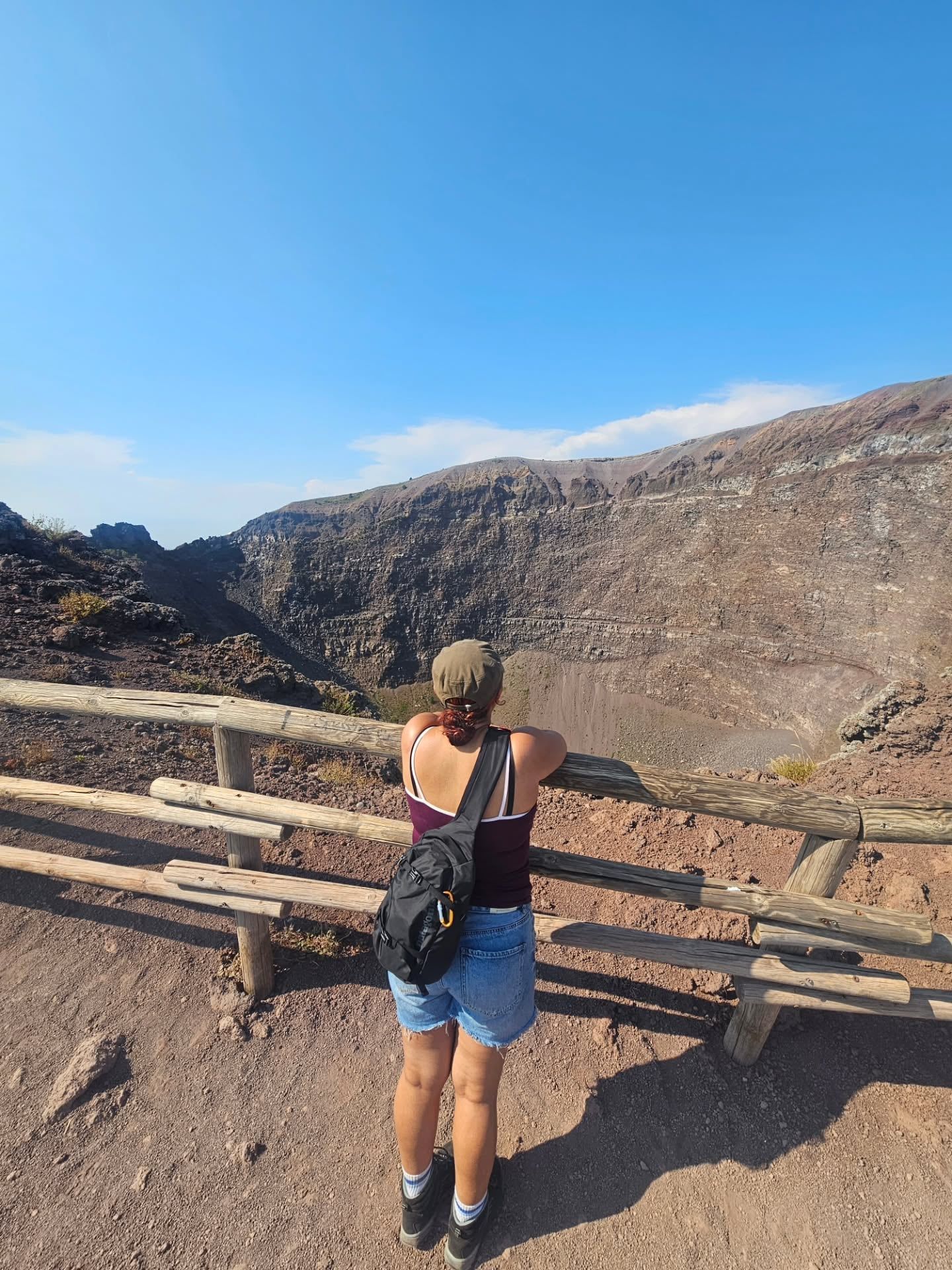
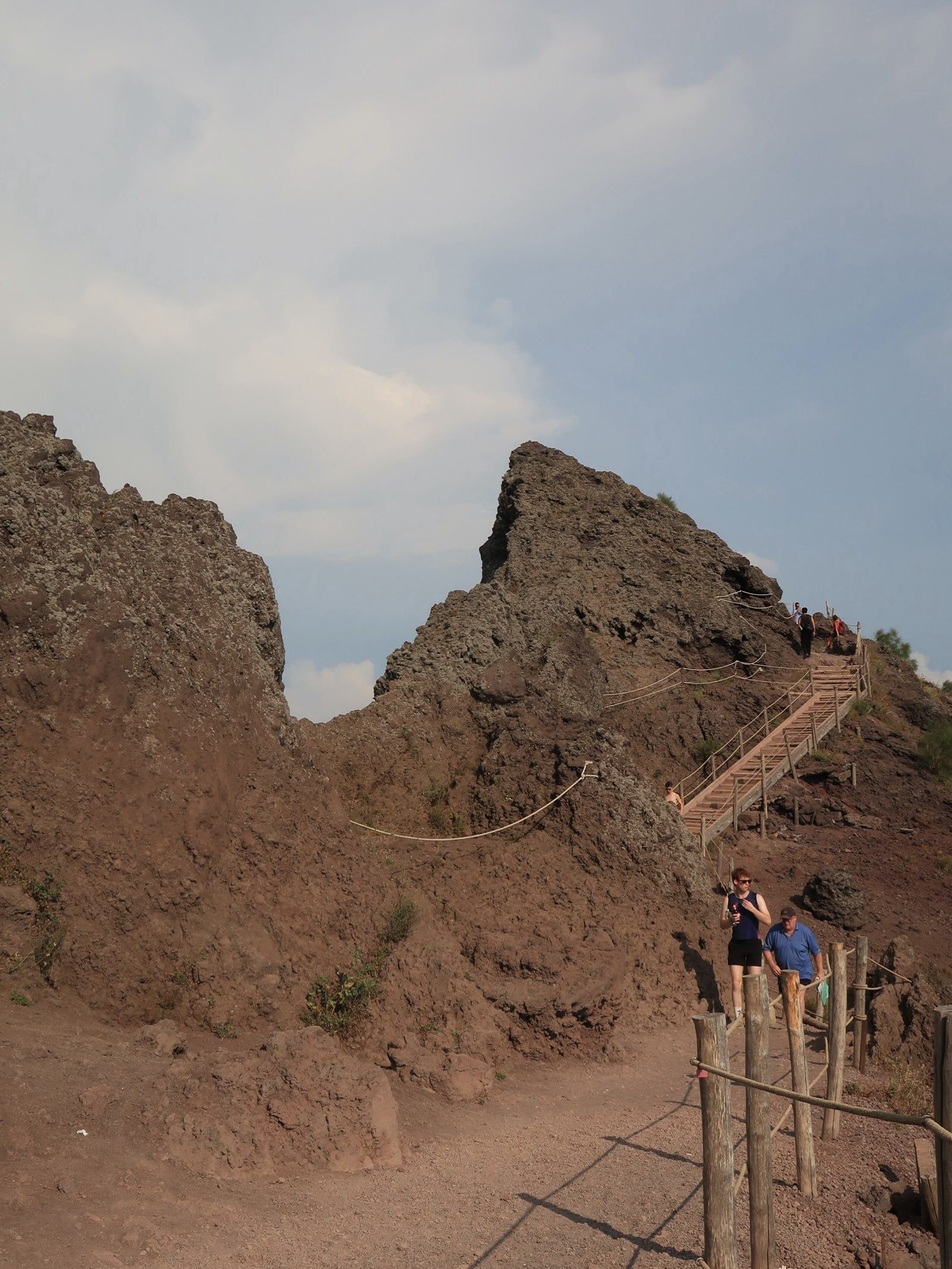
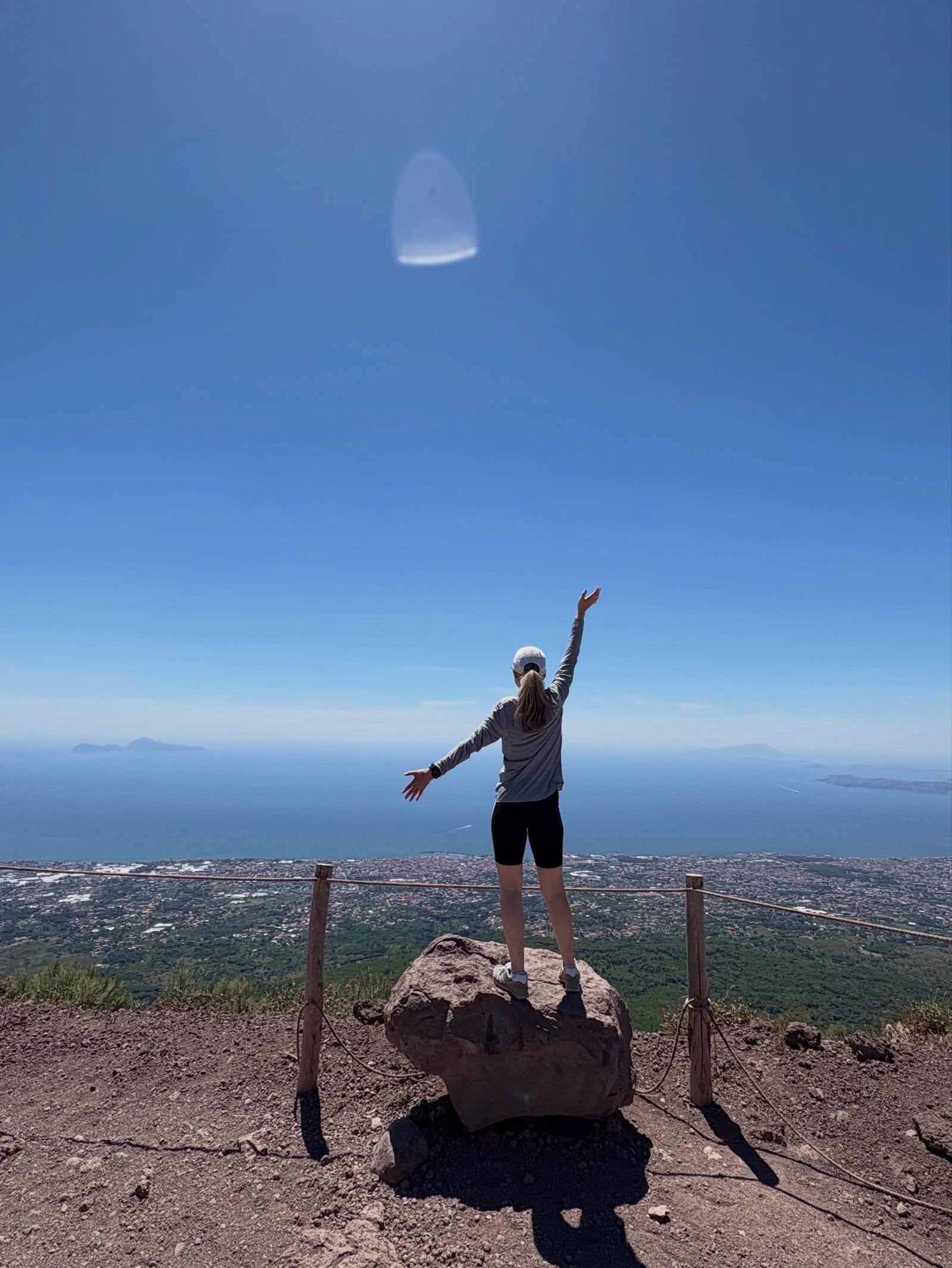
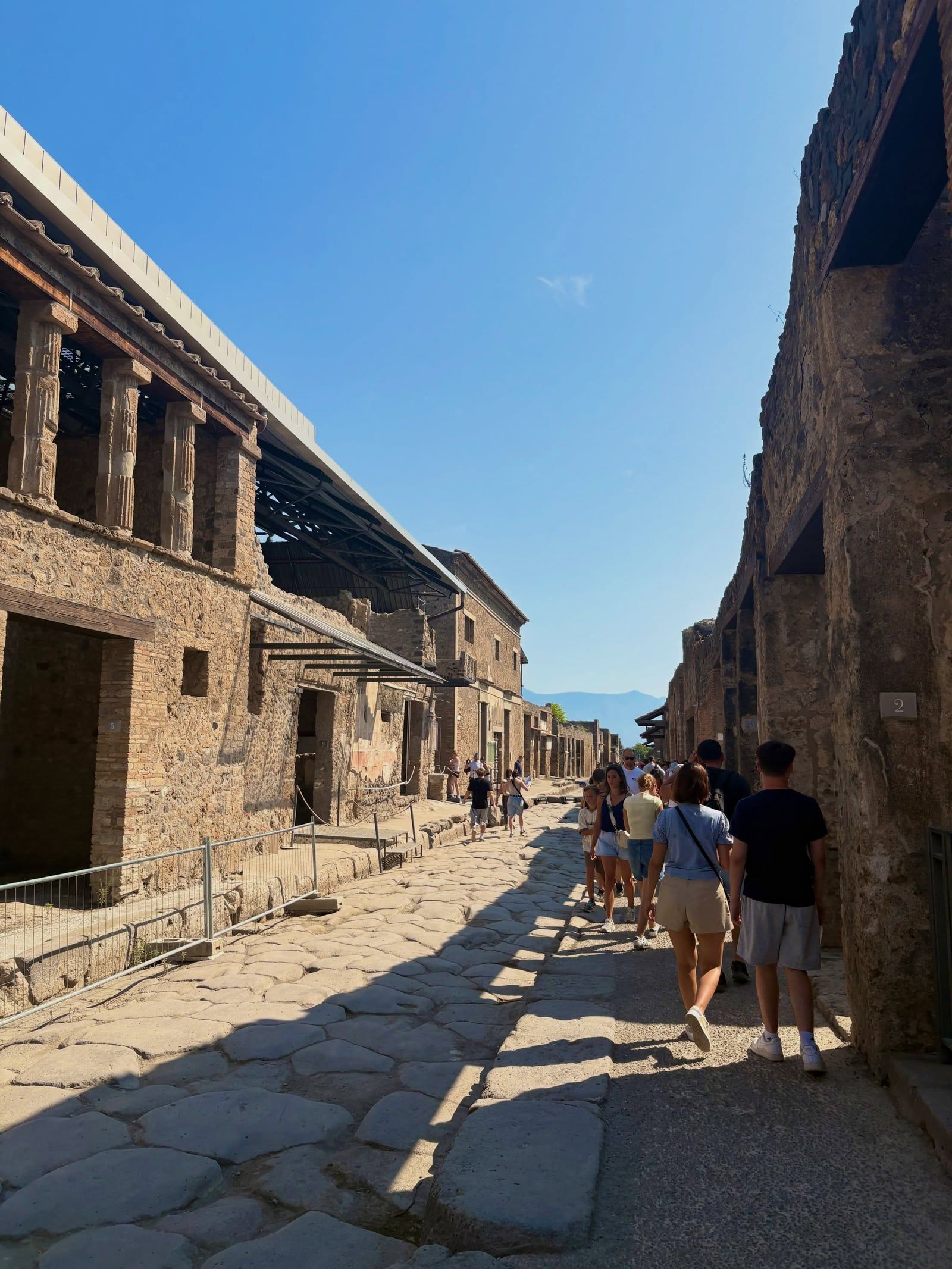
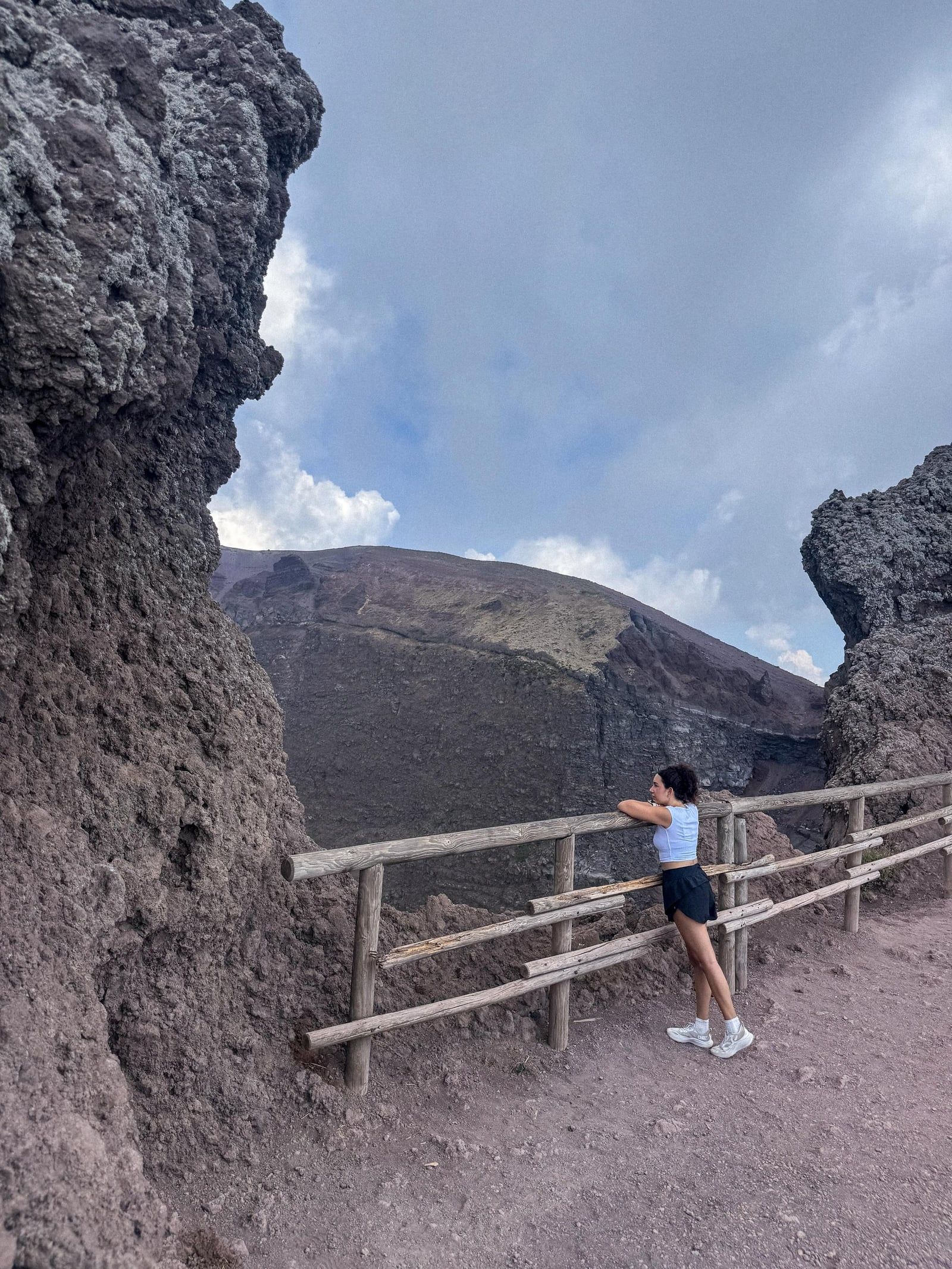
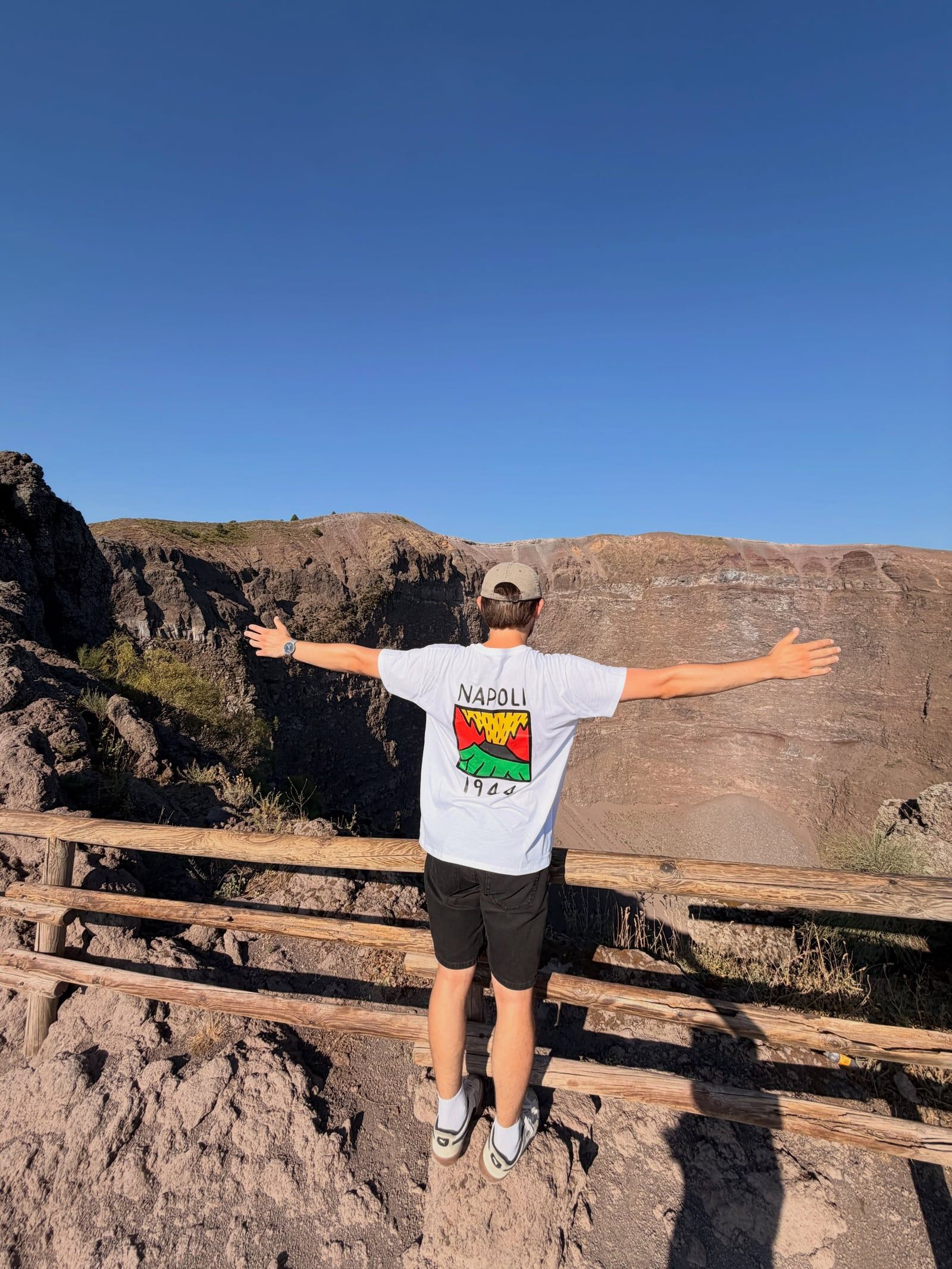
Hiking Trail No. 5 up Mount Vesuvius puts you on the edge of a 300-metre-deep active crater. You'll walk a steep, exposed gravel path to reach panoramic views of the Bay of Naples and spot sulfurous steam venting from the rock. Most tours combine this ascent with guided visits to the buried Roman cities below.
A 1.5-kilometre gravel switchback climbs to the 1,281-metre summit. The path is unpaved and exposed to the elements, requiring sturdy hiking shoes for the loose volcanic ash.
The 450-metre-wide caldera drops 300 metres down into the mountain. You can peer directly into the bowl where the 1944 eruption originated.
Wisps of sulfurous steam rise from cracks near the crater rim. They are the only visible surface evidence that the volcano remains geologically active.
The summit path looks out over the Sorrento Peninsula and the islands of Capri and Ischia. On clear days, the entire urban sprawl of Naples sits visible far below.
The hike crosses the Valle del Gigante between the modern cone and the ancient Mount Somma ridge. Layered lava flows from eruptions spanning 1631 to 1944 line the ground here.
Many itineraries pair the volcano hike with Pompeii or Herculaneum. You transition from the crater to the very streets buried by its 79 AD eruption.
Securing a time slot is the biggest hurdle for visiting Vesuvius. The park strictly caps entry at 360 hikers per hour, making advance planning mandatory.
Most guided tours include the €11.68 park entrance fee and handle the mandatory online reservation. If you book a transport-only option, check the fine print to ensure the crater ticket is actually secured.
The trail shuts down immediately when regional authorities issue orange weather alerts. High winds, heavy rain, or snow turn the ash paths slippery and unsafe, often forcing tours to reroute to Herculaneum instead.
Full-day tours from Rome, Naples, or Sorrento usually pack Vesuvius together with Pompeii or Herculaneum. Pick Herculaneum if you want a shorter, 90-minute archaeological walk before tackling the mountain.
The 20-minute ascent climbs at a 14-degree angle over loose gravel. Visitors with poor cardiovascular health or mobility issues should skip the hike, as standard wheelchairs cannot navigate the unpaved ash.
A few specialized operators offer horseback rides through the lower pine forests of the national park. These 3-hour routes stay around 500 metres above sea level and bypass the crowded summit shuttles entirely.
Park security frequently checks identification at the trailhead gates. Bring physical ID cards for everyone in your group, especially children under 18 or 6, who qualify for reduced or free entry.
Many full-day packages include a stop at a vineyard on the volcano's slopes for wine tasting and a light lunch. Transport-only shuttles leave you to find your own food, though a small cafe operates at the trailhead.
Swipe to see more
| Full-Day Pompeii & Vesuvius | Vesuvius Transport & Hike | Horseback Park Tour | Private Elite Tour | |
|---|---|---|---|---|
| Duration | 8-12 hours | 3-4 hours | 3 hours | 8 hours |
| Best for | Seeing the ruins and volcano in one trip | Travelers already staying in Pompeii or Herculaneum | Avoiding the summit crowds | Custom pacing and dedicated attention |
| Pace | Fast and physically demanding | Moderate (just the hike) | Relaxed | Tailored to your group |
| Inclusions | Transport, guide, ruins ticket, crater entry | Shuttle bus, crater entry, hiking guide | Horse rental, riding guide, wine tasting | Private vehicle, archaeologist guide, lunch |
Swipe to see more
The Gran Cono crater trail opens at 9:00 am year-round. Closing times shift depending on the season and available daylight.
You must exit the trail within one hour of the last permitted entry time. Access is allowed from 40 minutes before to 120 minutes after your ticketed time slot.
Public transit requires a train-to-bus connection. Take the Circumvesuviana train from Napoli Garibaldi toward Sorrento and get off at Ercolano Scavi station. The ride takes roughly 30 minutes.
From Ercolano Scavi, the Vesuvio Express shuttle bus runs every 40 minutes up to the Piazzale Quota 1000 trailhead. The combined round trip costs about €20.
If you are coming from Pompeii, take EAV Bus No. 808 from the Pompei Villa dei Misteri station. Drivers can take the A3 motorway toward Ercolano, but parking at the trailhead plaza is prohibited. You will need to use the paid municipal lots along the Strada Provinciale Ercolano-Vesuvio.
May, June, and September offer the best conditions. The temperatures are mild, and yellow broom and purple valerian bloom across the volcanic slopes.
July and August bring intense heat and max out the daily visitor cap of 3,240 people. The trail has zero shade, making midday climbs exhausting.
Regardless of the month, arrive right at the 9:00 am opening. Early morning provides the clearest crater visibility and beats the tour buses that arrive around noon.
The Gran Cono trail is an unpaved ash-and-gravel path with a 14-degree incline. Standard wheelchairs cannot navigate this loose surface, though specialized accessible tour operators offer motorized options and support.
Elderly visitors can manage the 1.5-kilometre hike at a slow pace. Vendors rent wooden walking sticks at the trailhead for a few euros, which helps with stability on the descent.
Visitors with significant mobility limitations, heart conditions, or breathing issues should consult a doctor before attempting the climb. The altitude exceeds 1,000 metres and the air can be thin.
Facilities are heavily concentrated at the Piazzale Quota 1000 trailhead. You will find a small cafe, a gift shop, and vendors renting walking sticks.
There are no restrooms, water stations, or food vendors along the actual crater trail. You must pack your own water and snacks for the hike.
Dress in layers. The 1,000-metre altitude means the summit is often windy and significantly cooler than Naples, even in the middle of summer.
You must buy a timed-entry ticket online before arriving. There is no ticket office at the gate, and arriving without a reservation usually means getting turned away.
Hikers must stay on the marked Trail No. 5. Accessing the northern or eastern summit rim is strictly prohibited for safety reasons.
Drones are banned in the national park without prior written consent. General personal photography is fine, but commercial filming requires a permit.
No. There is no ticket office at the trailhead. You must purchase a timed-entry ticket online in advance through the official park website or an authorized reseller.
The round trip on Trail No. 5 takes about one to two hours. Park rules cap the standard linear route at a two-hour maximum duration.
The path climbs at a 14-degree angle over loose volcanic gravel for about 1.5 kilometres. It requires a moderate level of fitness and sturdy closed-toe shoes.
The park closes the crater trail immediately during orange-level weather alerts. High winds, snow, or heavy rain make the ash surface too slippery and dangerous for hiking.
Mount Vesuvius last erupted in March 1944. It produced lava flows and ashfall that damaged nearby towns, though it was much smaller than the 79 AD event.
Facilities are limited to the parking area at Piazzale Quota 1000. There are no restrooms or water stations along the actual crater trail.
The Vesuvius Observatory continuously monitors the mountain. Scientists expect roughly two weeks of warning before any major eruption, allowing ample time to evacuate the area.
Children can complete the trail, and those under six enter for free with a parent. You just need to supervise them closely near the steep drop-offs and loose gravel.
Wear closed-toe hiking shoes or trainers with solid grip. Dress in layers with a windbreaker, as the 1,000-metre altitude gets cold and windy even in summer.
Full-day tours from Naples or Rome usually package both sites together. Check your specific booking, as some budget options only cover transport and require you to buy entry tickets separately.
Browse verified tours with free cancellation and instant confirmation.
Find Tours


You'll walk through the Pompeii ruins on a standard or extended route with group, semi-private, or private guides. The extended tour visits additional villas and residential blocks further from the main forum. Standard tours cover the amphitheater and the central plazas. It's a lot of walking on uneven stones. Combine the ruins with a trip to Mt. Vesuvius by choosing a steep hike to the crater or a flatter walk led by a geologist. The crater path is dusty and requires sturdy shoes. If you add the three-course lunch, you'll eat on a terrace facing the Bay of Naples. Book the geologist-led walk if you prefer technical details about the 79 AD eruption over the physical climb.
For a full refund, cancel at least 24 hours before the scheduled departure time.
English, Spanish


An archaeologist leads this two-hour walk through the streets buried by the 79 AD eruption. You'll skip the ticket lines at the entrance to see the Forum, the thermal baths, and frescoes that still hold their color after two millennia. It's a lot of walking on uneven stones. Wear shoes with grip. Lunch is a sit-down meal of local pasta and wine. Then the bus climbs Vesuvius. A mountain guide leads the hike from the drop-off point to the Great Cone. It's a steep, dusty walk. The view from the top stretches across the entire Bay of Naples, provided the clouds stay away. Bring a light jacket for the summit—it’s colder up there than in the ruins.
For a full refund, cancel at least 24 hours before the scheduled departure time.
English, Italian, French, Spanish


You’ll spend 2.5 hours touring the Pompeii ruins before climbing to the crater of Mount Vesuvius. The group arrives early to avoid the morning traffic and the crowds at the gates. This route covers the forum and the main villas. Wear shoes with grip because the Roman basalt blocks are uneven and slick. After the ruins, the bus climbs to the 1,000-meter mark on the volcano. From there, you’ll hike the final 200 vertical meters to the crater’s edge. The path is steep and dusty. At the summit, the 360-degree view covers the crater and the Bay of Naples. Bring a light jacket—it’s often ten degrees cooler at the summit than in the city below.
For a full refund, cancel at least 24 hours before the scheduled departure time.
English, French, Spanish


Herculaneum is the first stop, where volcanic mud preserved organic materials like wood and fabric that Pompeii lost. You'll walk through two-story villas and see mosaics still fixed to the floors and walls. It's smaller and easier to navigate in ninety minutes than the larger ruins nearby. Afterward, the car climbs Vesuvius to the 1,000-meter parking lot. The final ascent to the crater rim is a 20-minute uphill walk on loose tephra. It's steep. Wear shoes with grip. Pompeii fills the afternoon with 66 hectares of excavated Roman streets, bakeries, and theaters. The site is massive, so focus on the Forum and the House of the Vettii if your energy flags. Di Sarno Car Service handles the transit from Naples, including hotel pickup and drop-off. You'll have dedicated free time at each stop, but you must buy your own entry tickets and lunch. This route is the most efficient way to hit all three locations in eight hours. It's a lot of walking.
For a full refund, cancel at least 24 hours before the scheduled departure time.


A local guide leads the walk through Pompeii’s excavated streets to see the villas and forums preserved by the AD 79 eruption. You’ll navigate the site on foot. Wear shoes with grip because the Roman basalt paving stones are uneven and slick. It’s dusty work. Lunch is at a vineyard on the slopes of Mount Vesuvius, paired with wine grown in the volcanic soil. Afterward, you’ll mount a horse for a trek through the National Park at 500 meters above sea level. The trail follows the volcano’s lower ridges through pine forests. Expect the horses to move at a walking pace only. If you want to gallop or ride fast, this isn't the right tour for you.
For a full refund, cancel at least 24 hours before the scheduled departure time.
English


You spend the morning walking through Pompeii's streets with a professional archaeologist. Groups are kept small. You'll see the Forum and the remains of villas where the 79 AD eruption froze daily life. It's a lot of walking on uneven Roman stones, so wear shoes with actual grip. That's the best way to see the site. A 14-seat minibus departs for the Vesuvius trailhead in the afternoon. The final stretch to the crater is a steep, 30-minute climb on loose gravel. It's a slog. But the path ends at the rim of the quiescent crater where you can see the entire Bay of Naples. The minibus returns to the Pompeii entrance at the end of the day. If it rains heavily, the park service often closes the crater path for safety—check the weather before you head up.
For a full refund, cancel at least 24 hours before the scheduled departure time.
English


Minibuses for 14 people depart from the main entrance of the Pompeii ruins. Your hiking guide meets you at this gate before the drive up the mountain. It's a direct shuttle to the trailhead, skipping the logistics of local buses. Don't expect a luxury coach; these are standard vans built for the switchbacks. The final ascent to the crater is a 30-minute steep walk on loose volcanic gravel. It's a slog in the midday heat, so bring a liter of water. At the summit, you can look into the 300-meter deep crater and across the Gulf of Naples. The path gets incredibly dusty when the wind picks up. Wear closed-toe shoes or you'll be emptying grit out of your socks for the rest of the afternoon.
For a full refund, cancel at least 24 hours before the scheduled departure time.
English


Buses depart from Sorrento and Naples for a two-hour guided walk through the UNESCO-listed excavations at Pompeii. Authorized guides lead the group past 2,000-year-old bakeries, communal baths, and villas with intact red-and-ochre frescoes. You'll see deep ruts left by chariot wheels in the stone streets. Wear shoes with grip; the Roman basalt blocks are uneven and get slick if it drizzles. It’s a long morning on your feet. Lunch is a light meal at a local restaurant before the drive up the volcano. The bus climbs the lower slopes, leaving you to hike the final stretch to the 1,280-meter crater rim. A specialized mountain guide meets the group at the top to explain the 79 AD eruption. From the summit, the Gulf of Naples spreads out below. Clouds often obscure the view by mid-afternoon, so hope for a clear sky. Bring a windbreaker. Skip this tour if you have knee issues—the final path is steep and gravelly.
For a full refund, cancel at least 24 hours before the scheduled departure time.
English


This tour takes you through the restricted trails of Vesuvius National Park on horseback. You’ll avoid the crowded shuttle buses used by most visitors to reach the slopes. Volcanic scrub and pine forests line the path, which overlooks the Bay of Naples and the islands of Capri and Ischia. It’s a slow, steady ascent. The terrain is uneven and smells faintly of sulfur. These horses handle the footing well. The volcano itself hasn’t erupted since 1944. It’s quiet. Wear long pants and closed-toe shoes to protect against the low brush. If you’re prone to allergies, the dust on the dry paths can be an issue in mid-summer. Book the morning slot to avoid the heat on the ridges.
All sales are final. No refund is available for cancellations.
English, Italian, Turkish


A two-hour walk through Pompeii begins after a 40-minute drive from Naples. You'll bypass the main ticket lines and head straight to the Forum, the Macellum market, the thermal baths, and the Lupanar (an ancient brothel). The route has several private villas where red and yellow frescoes still cling to the walls. It's a lot of walking on original Roman stone. Wear sturdy shoes. Lunch at a nearby restaurant is pizza and a first course. Bottled water is included. It’s a standard tourist menu, but it’s fast. The Vesuvius trailhead is a 30-minute drive from lunch up the volcanic slopes. Priority tickets skip the lower gate lines to reach the 1,281-meter start point. Here, a licensed alpine guide explains the local geology as you walk to the crater rim. You'll see the steam vents and the drop into the caldera before the return drive to Naples. It's a steep climb. The wind at the summit is sharp, so bring a light layer even in August.
For a full refund, cancel at least 24 hours before the scheduled departure time.
English, Italian, French, Spanish