About All Tours And Pompeii ToursPompeii from Naples ToursFrom Sorrento ToursFrom Naples ToursPompeii From Rome Tours Directions Hours & Fees Guides
Find Tours 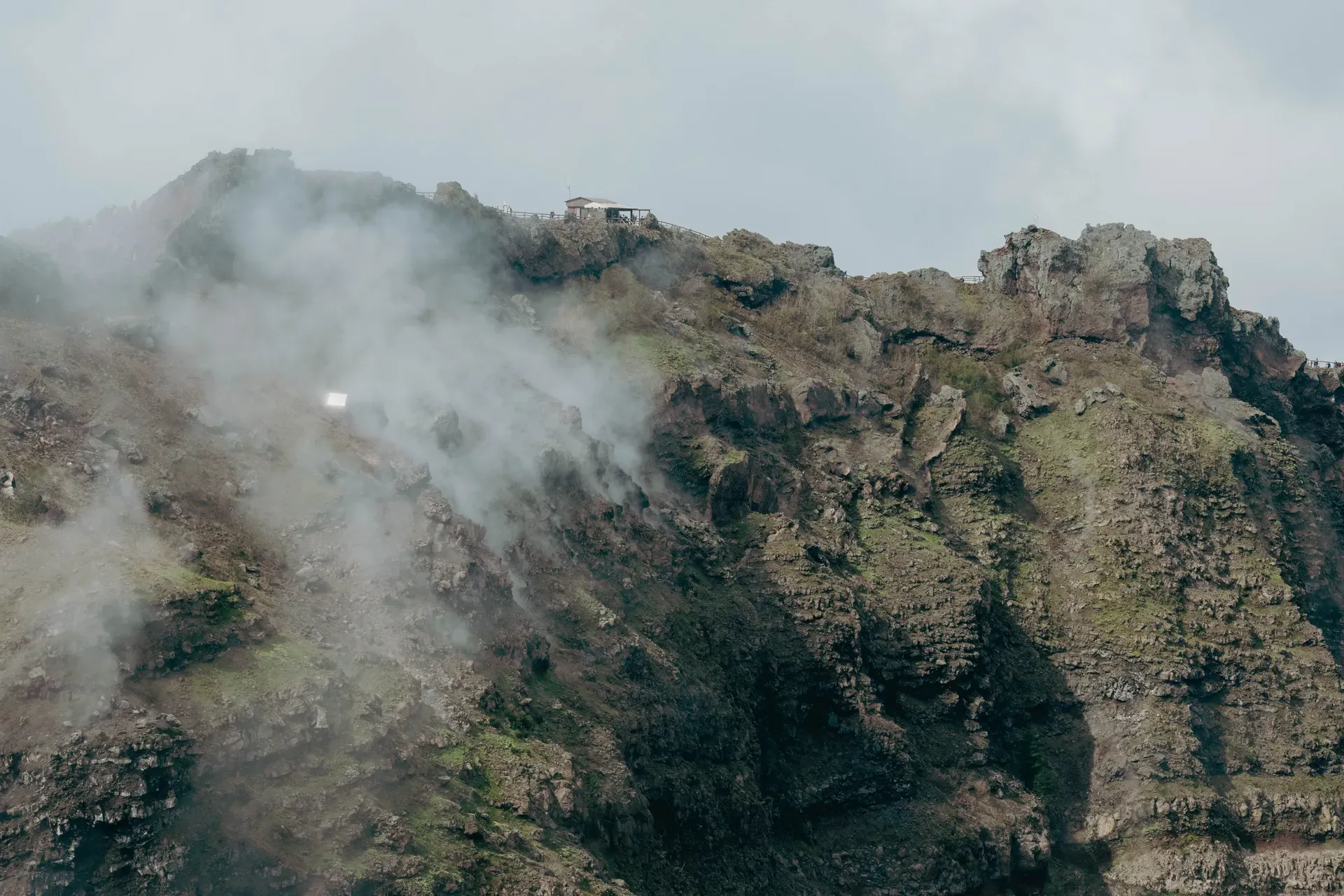
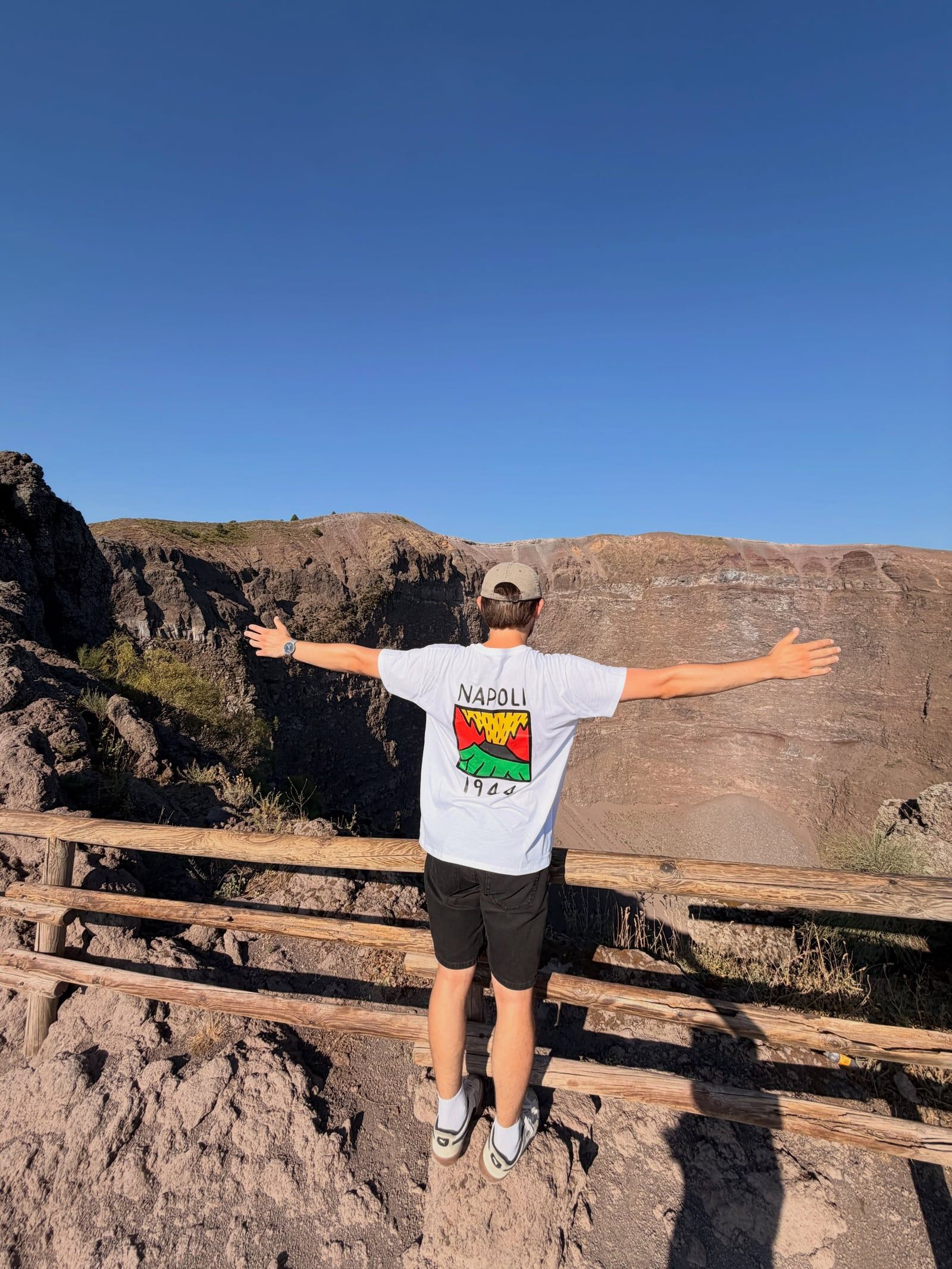
Walk Trail No. 5 through loose volcanic ash to reach the 450-metre-wide summit crater. From 1,281 metres up, you can watch sulfurous steam vent from the rock and look straight down into the mountain that buried Pompeii.
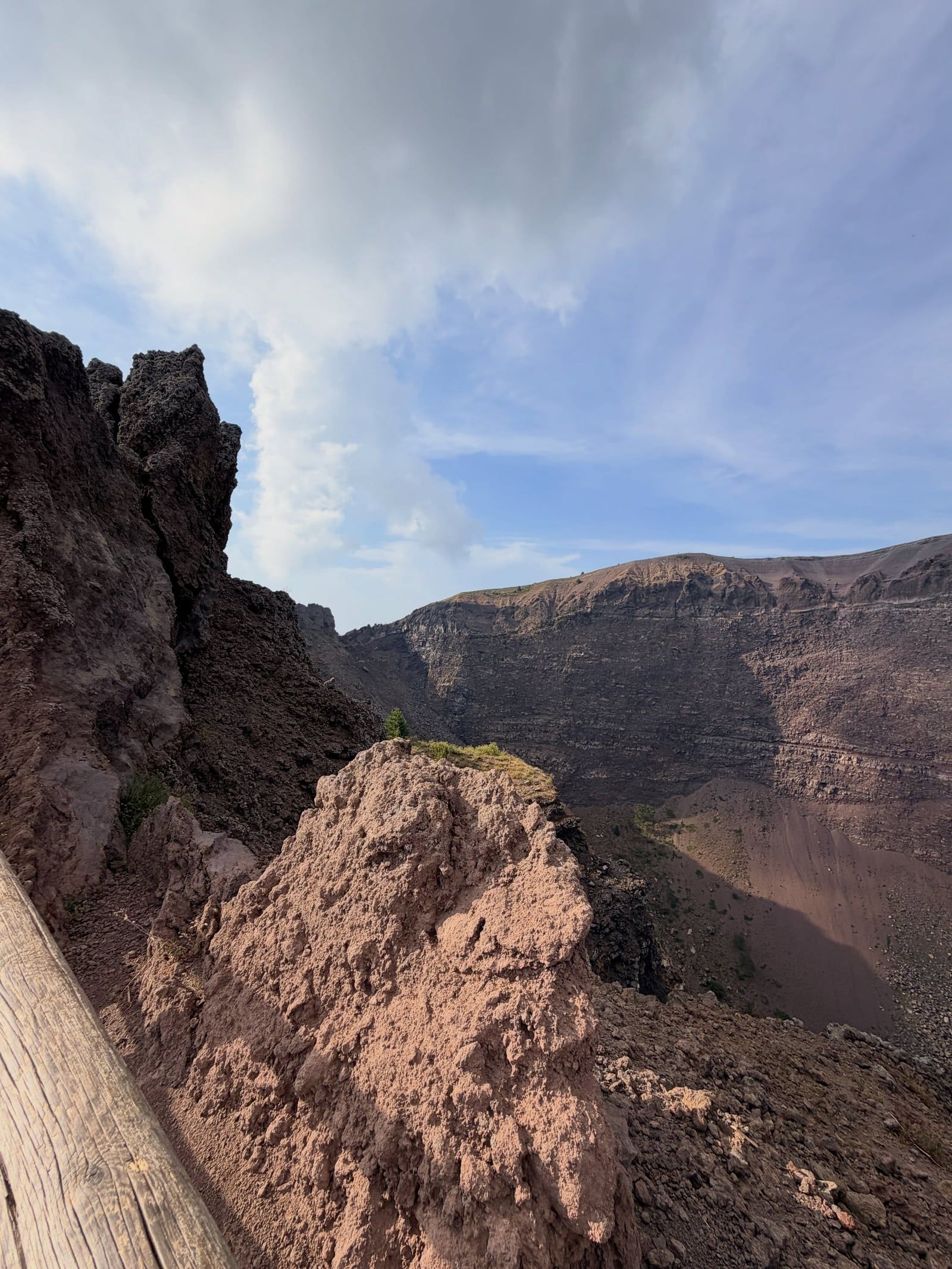
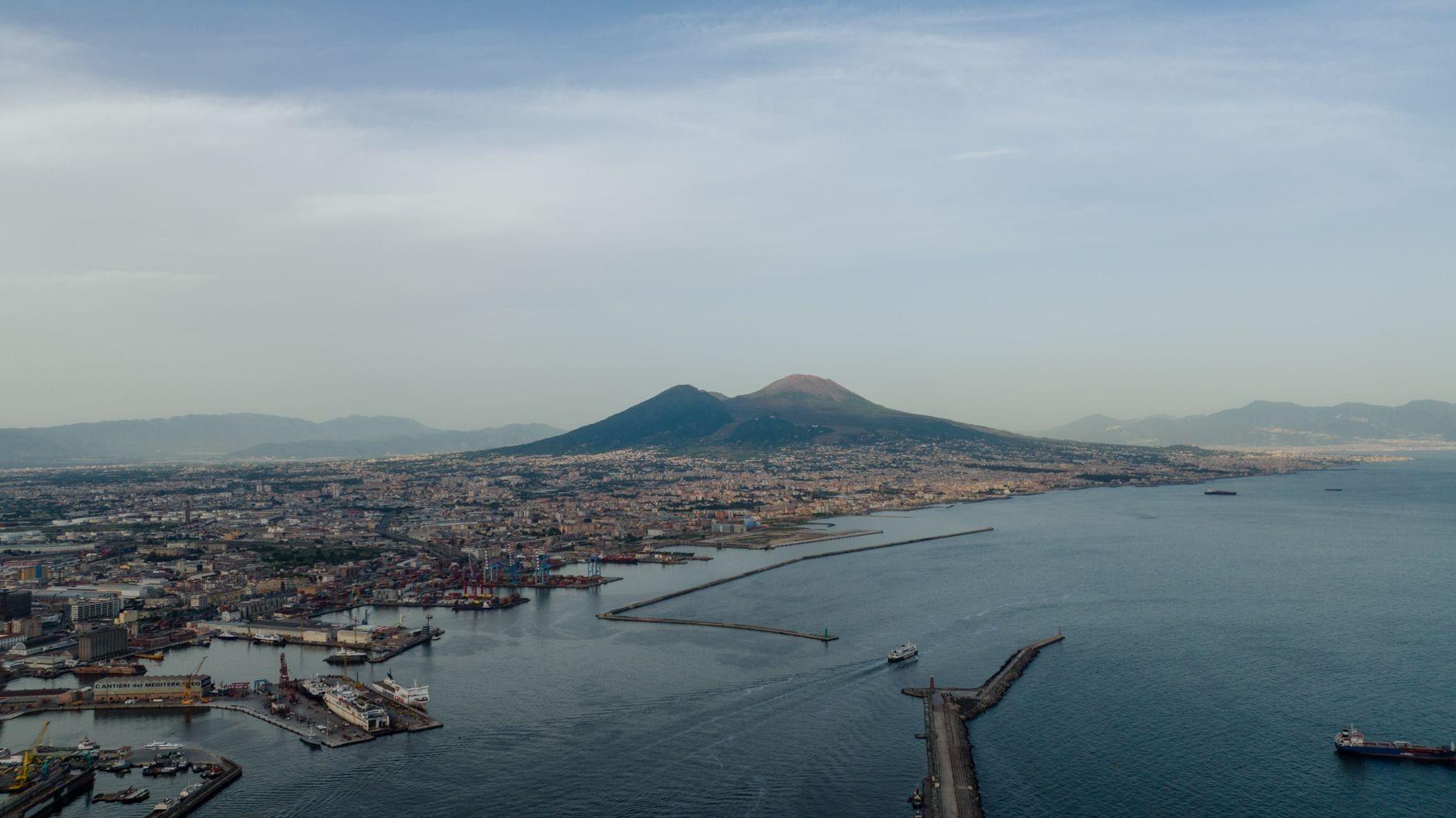
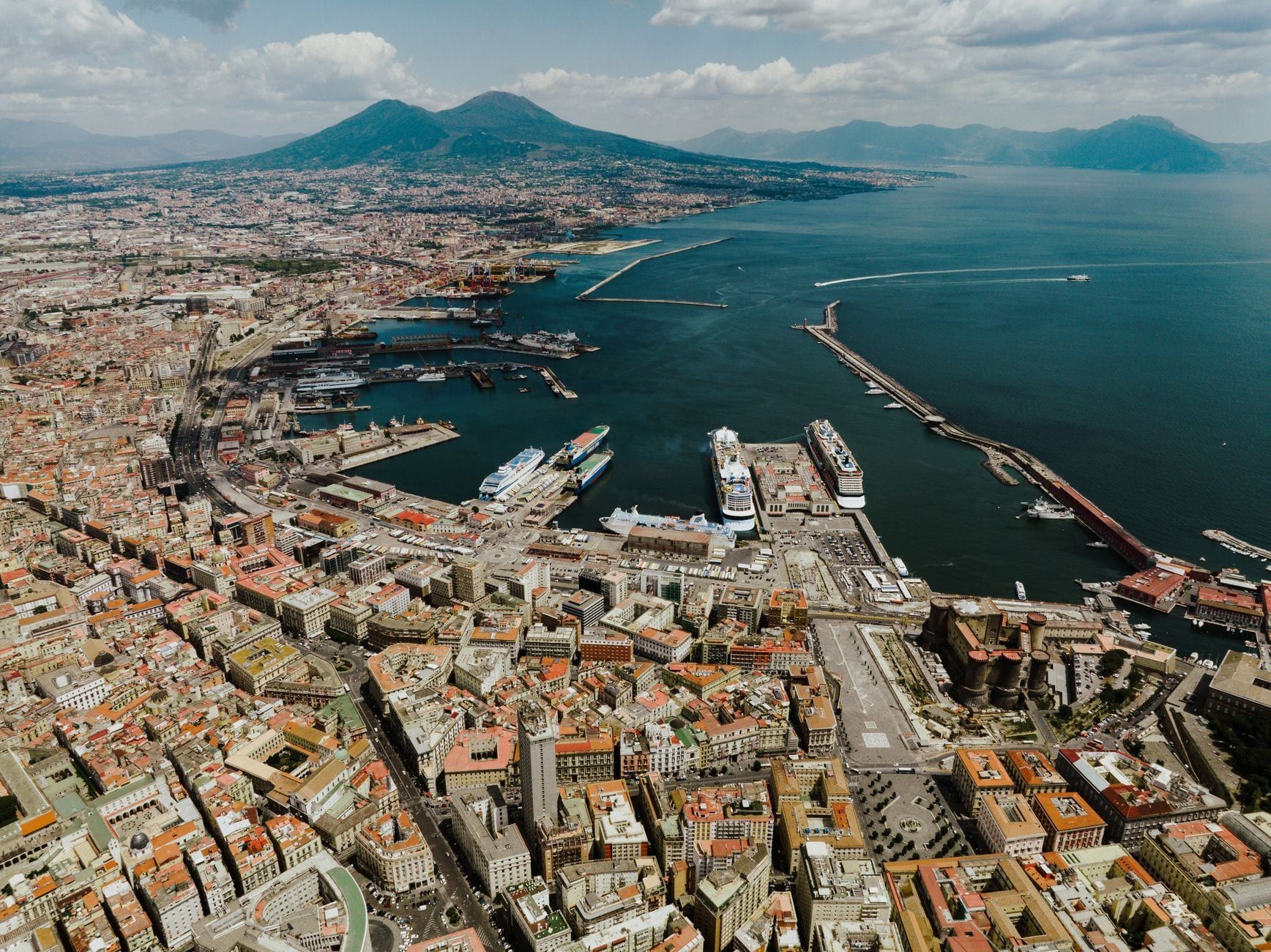
Find Guided ToursMount Vesuvius rises 1,281 meters above the Bay of Naples in southern Italy. The active stratovolcano sits 9 kilometers east of Naples, anchoring the 8,482-hectare Vesuvius National Park. The mountain has a distinct truncated cone shape. At the summit, a crater 450 meters across and 300 meters deep vents small, sulfurous fumaroles. That's the only visible sign the volcano remains active today.
Vesuvius actually grew inside the remains of an older volcano, Mount Somma. That peak last erupted 17,000 years ago. The two mountains are separated by the Valle del Gigante, a valley layered with ash and lava flows from centuries of eruptions. You'll still see Somma's ancient caldera ridge curving around the modern cone, with its highest point, Punta Nasone, reaching 1,132 meters.
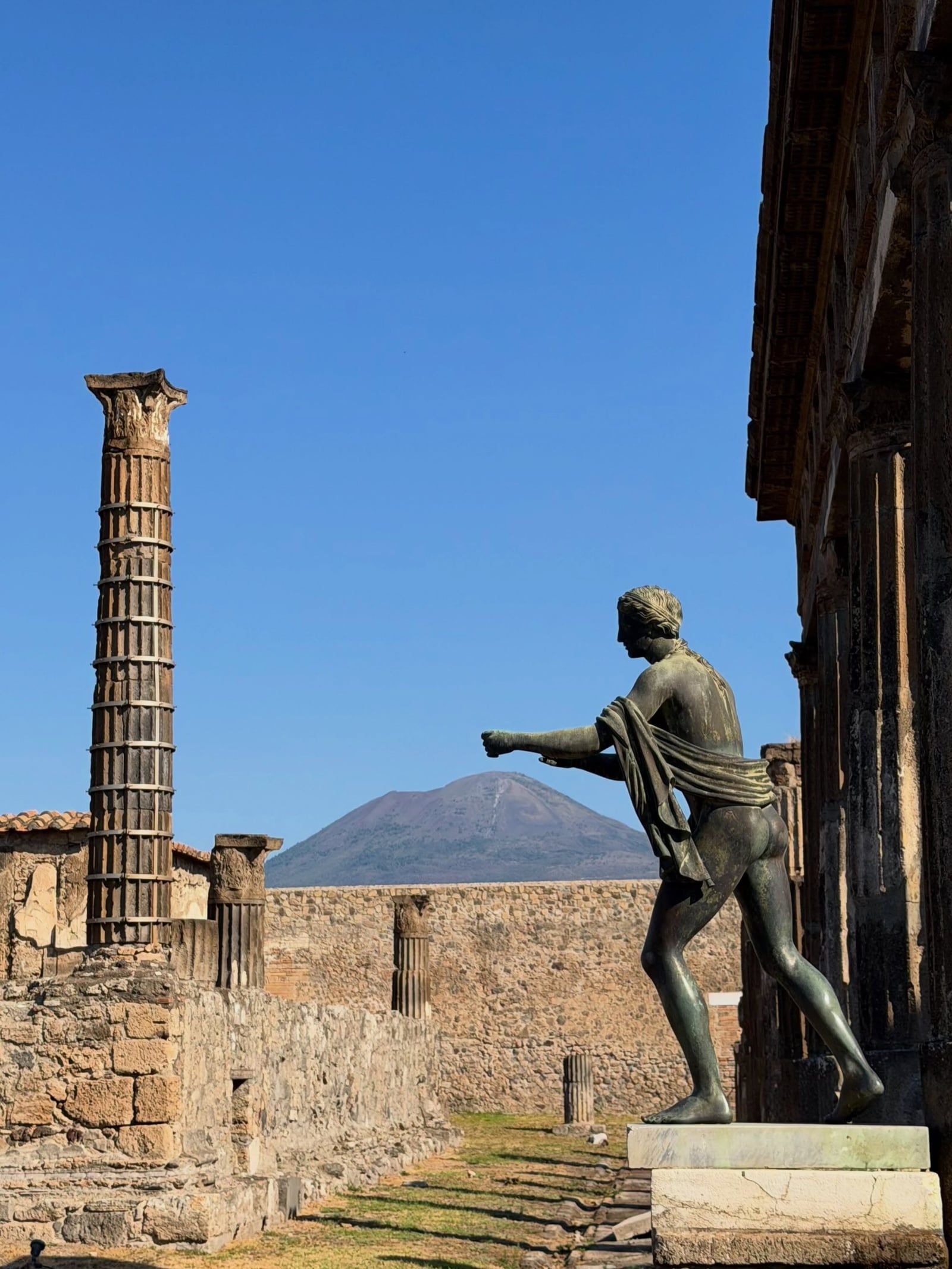
As the only active volcano on the European mainland, Vesuvius is defined by its 79 AD Plinian eruption. The blast sent an ash column 33 kilometers into the sky and buried the Roman cities of Pompeii, Herculaneum, Oplontis, and Stabiae. More than 1,000 people died, with estimates reaching up to 3,500. Pliny the Younger watched the catastrophe unfold and recorded it in two letters to Tacitus, leaving a rare eyewitness account of the destruction.
The volcano has erupted roughly three dozen times since then. Lava flows regularly scarred the slopes from 1631 until the most recent blast in March 1944. Today, it sleeps in the middle of a densely populated red zone. About 700,000 people live in the immediate shadow of the peak. The national park, established in 1995, protects the surrounding Mediterranean scrubland and keeps the crater accessible to hikers via Trail No. 5.
Discover the full history and cultural significance on our About page.
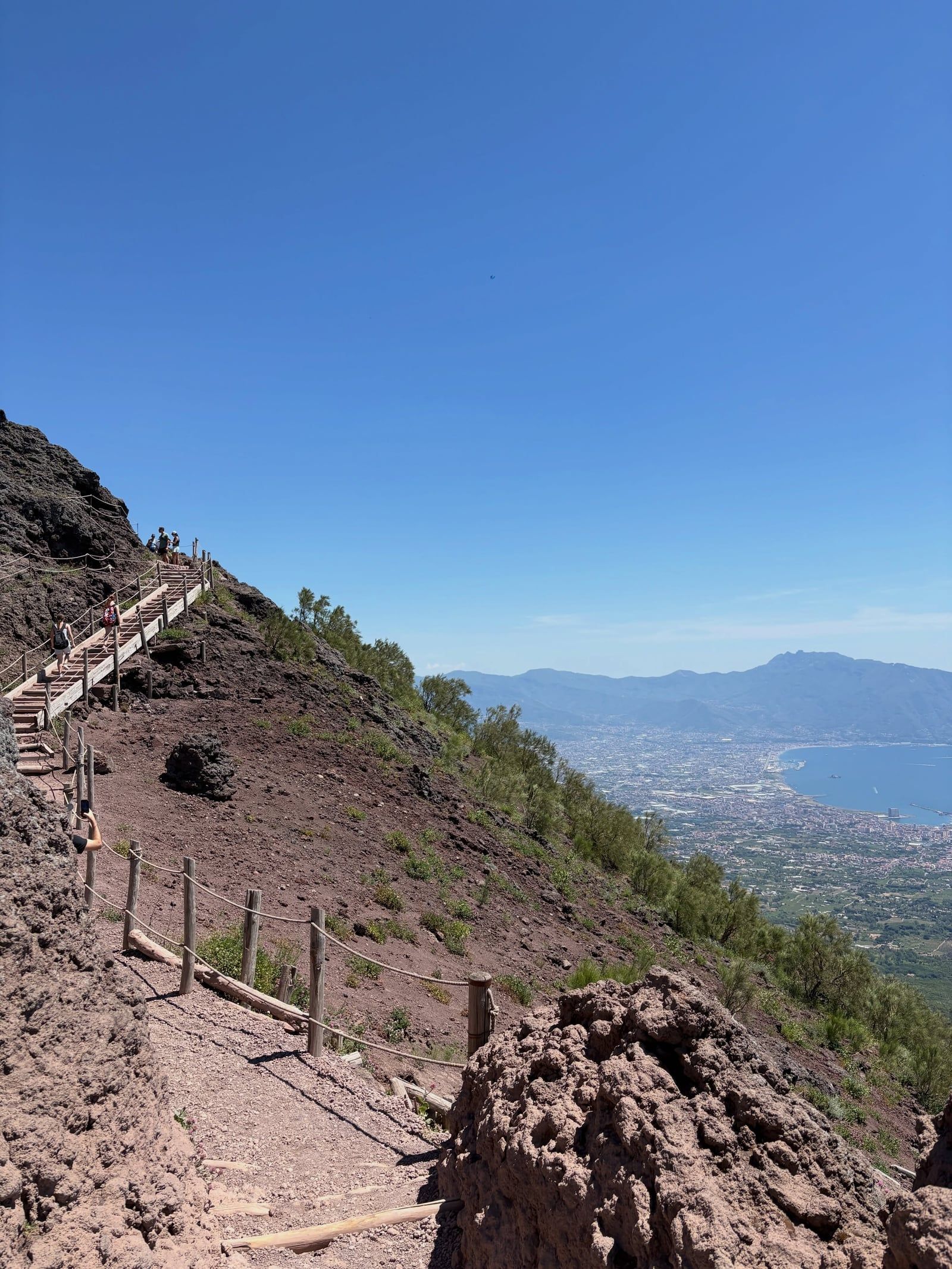
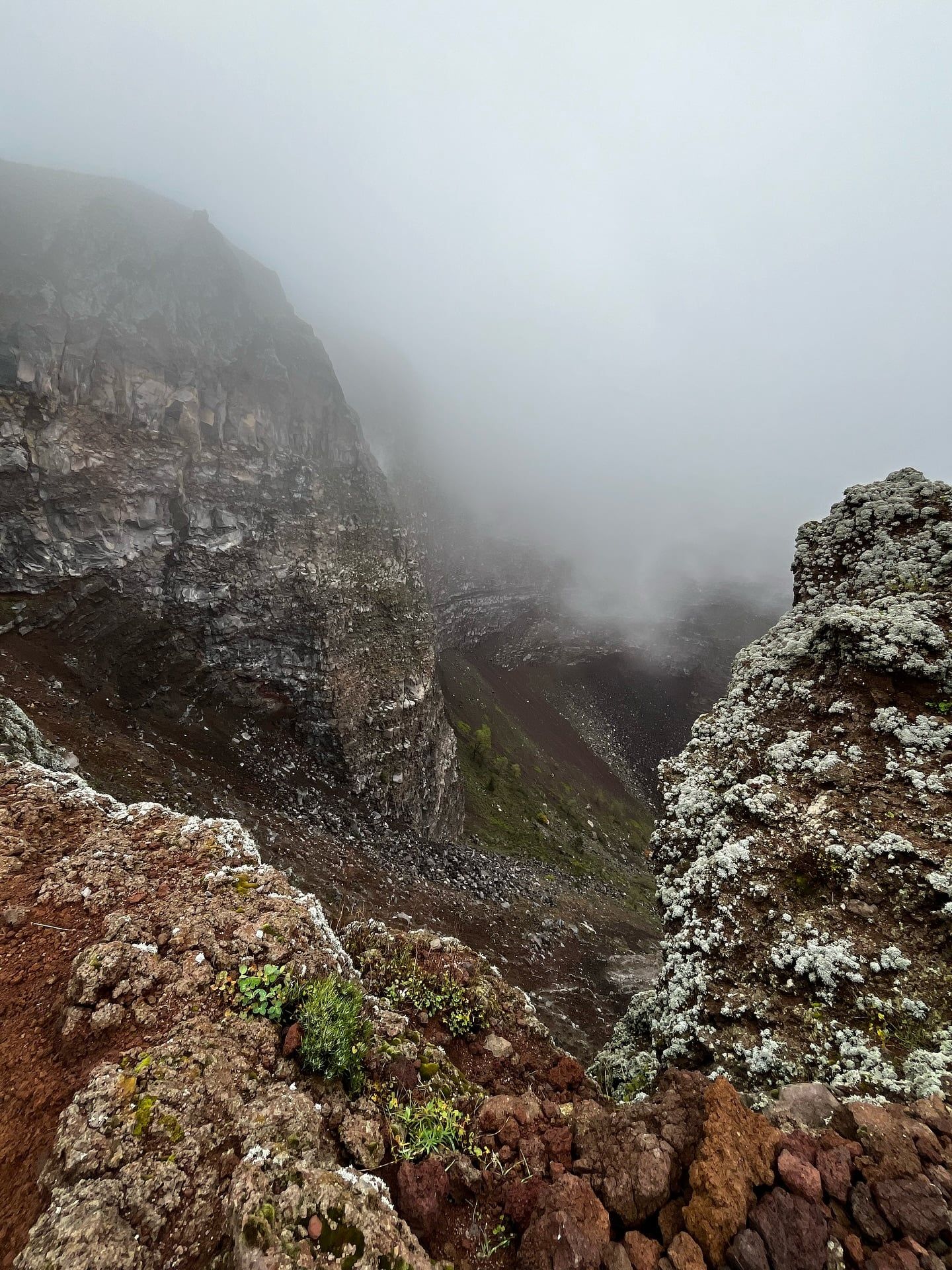
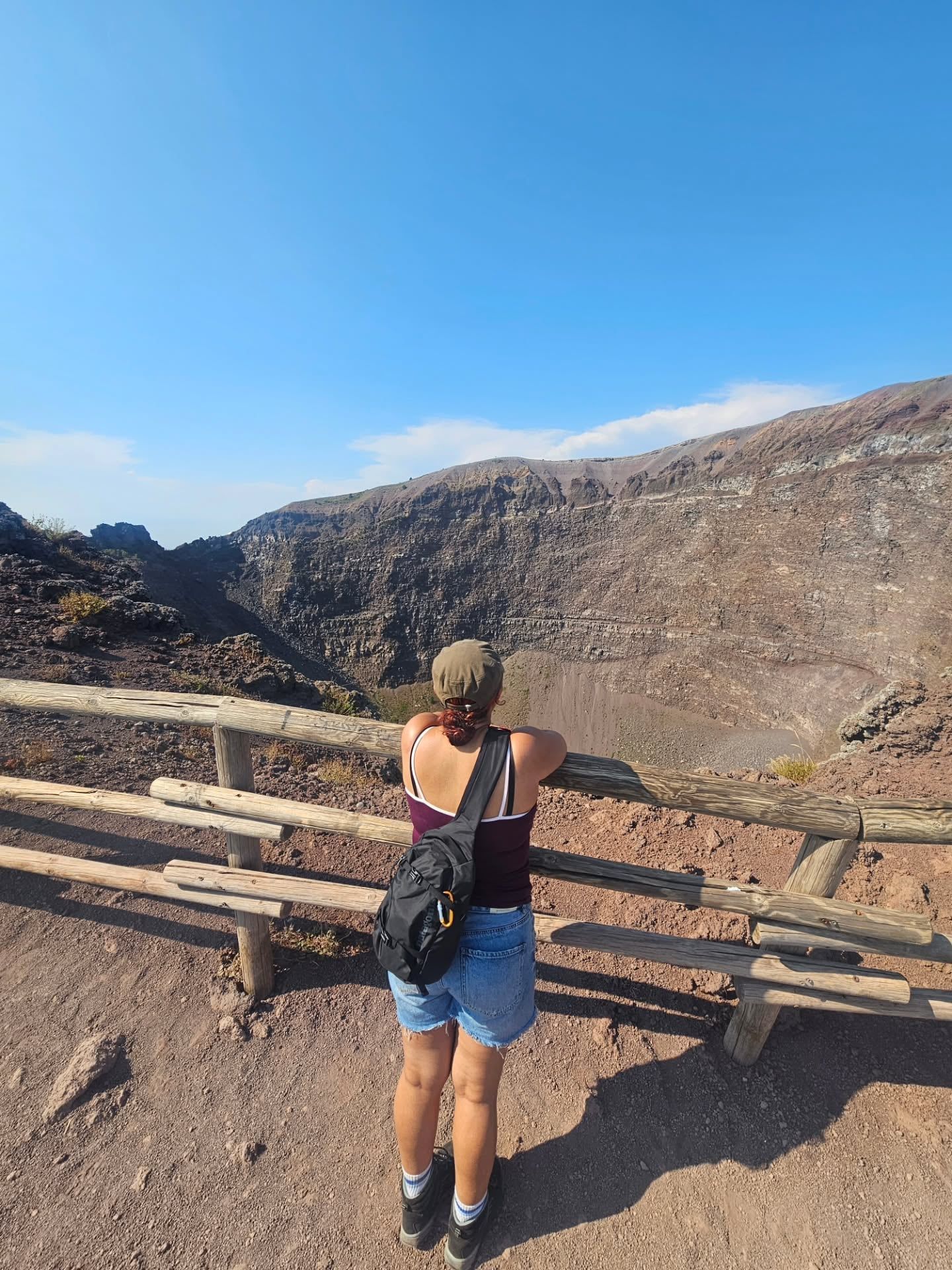
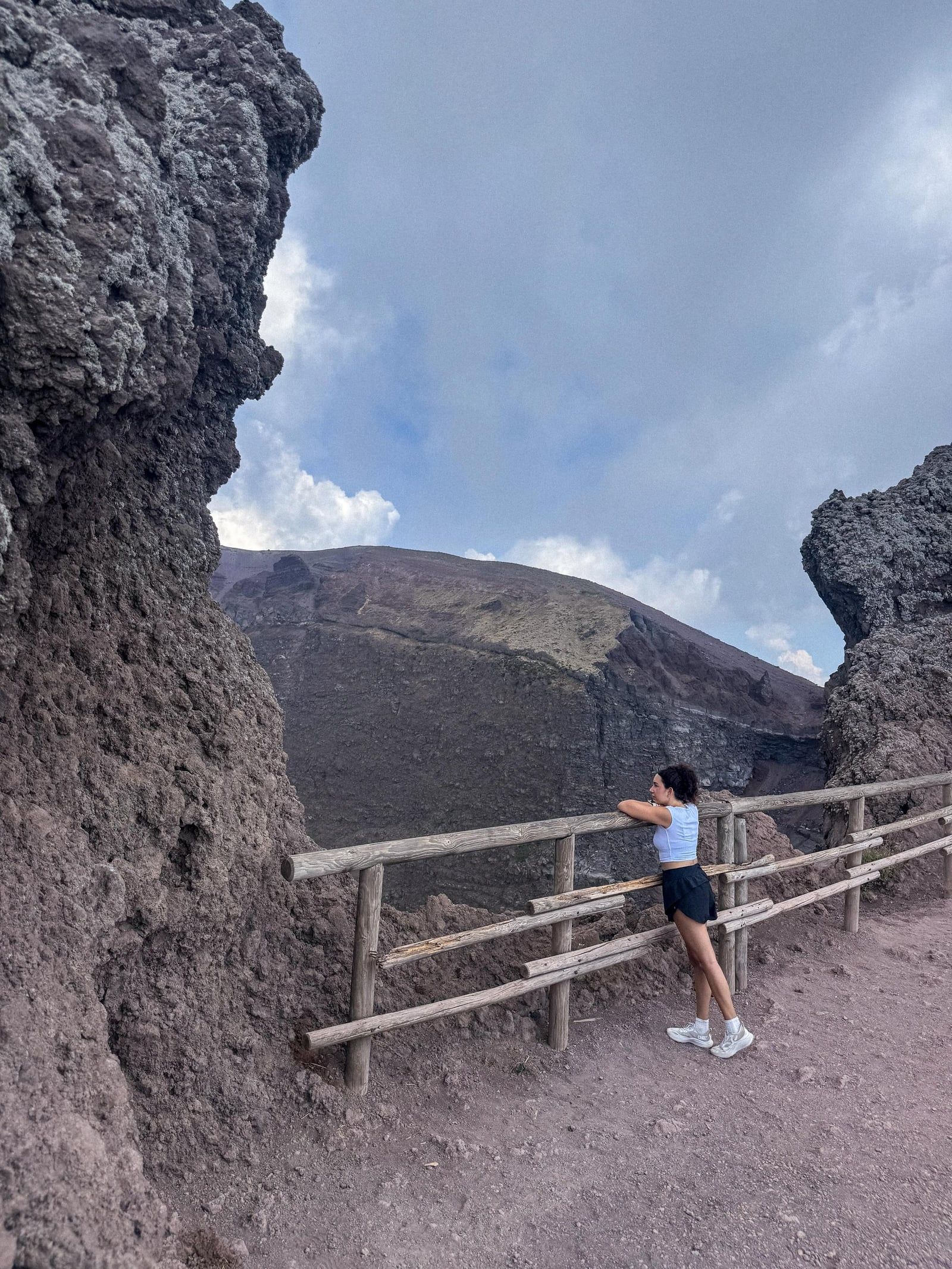
Trail No. 5 takes you right to the rim of the 450-metre-wide summit crater. Look 300 metres down into the rock. You'll see sulfurous steam venting from small fumaroles, physical proof this mountain is only dormant since its last eruption in 1944.
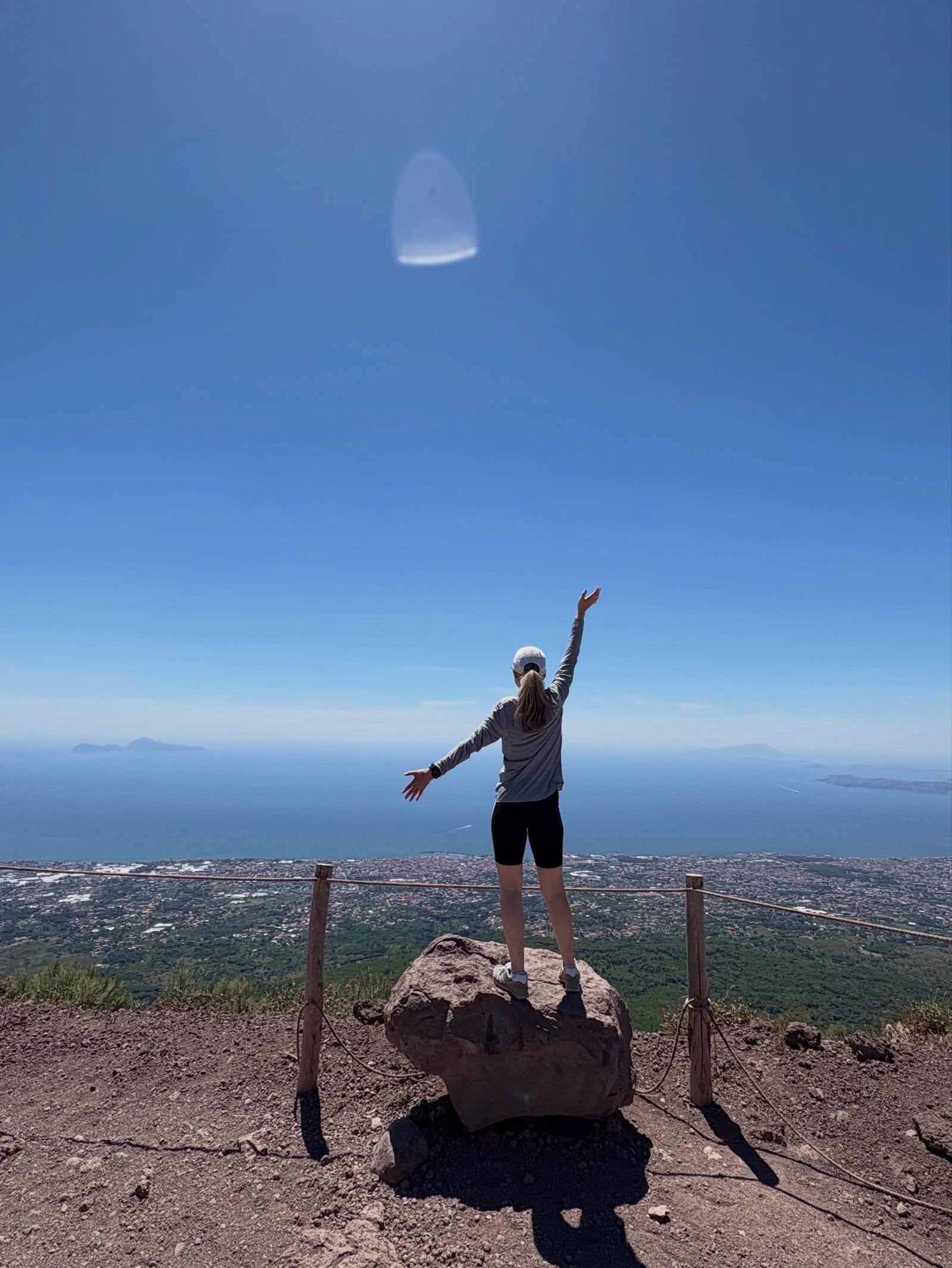
The exposed switchbacks on the ascent offer clear sightlines over the Bay of Naples. Look south across the Sorrento Peninsula toward the islands of Capri and Ischia. The dark volcanic terrain drops off sharply into the deep blue water below.
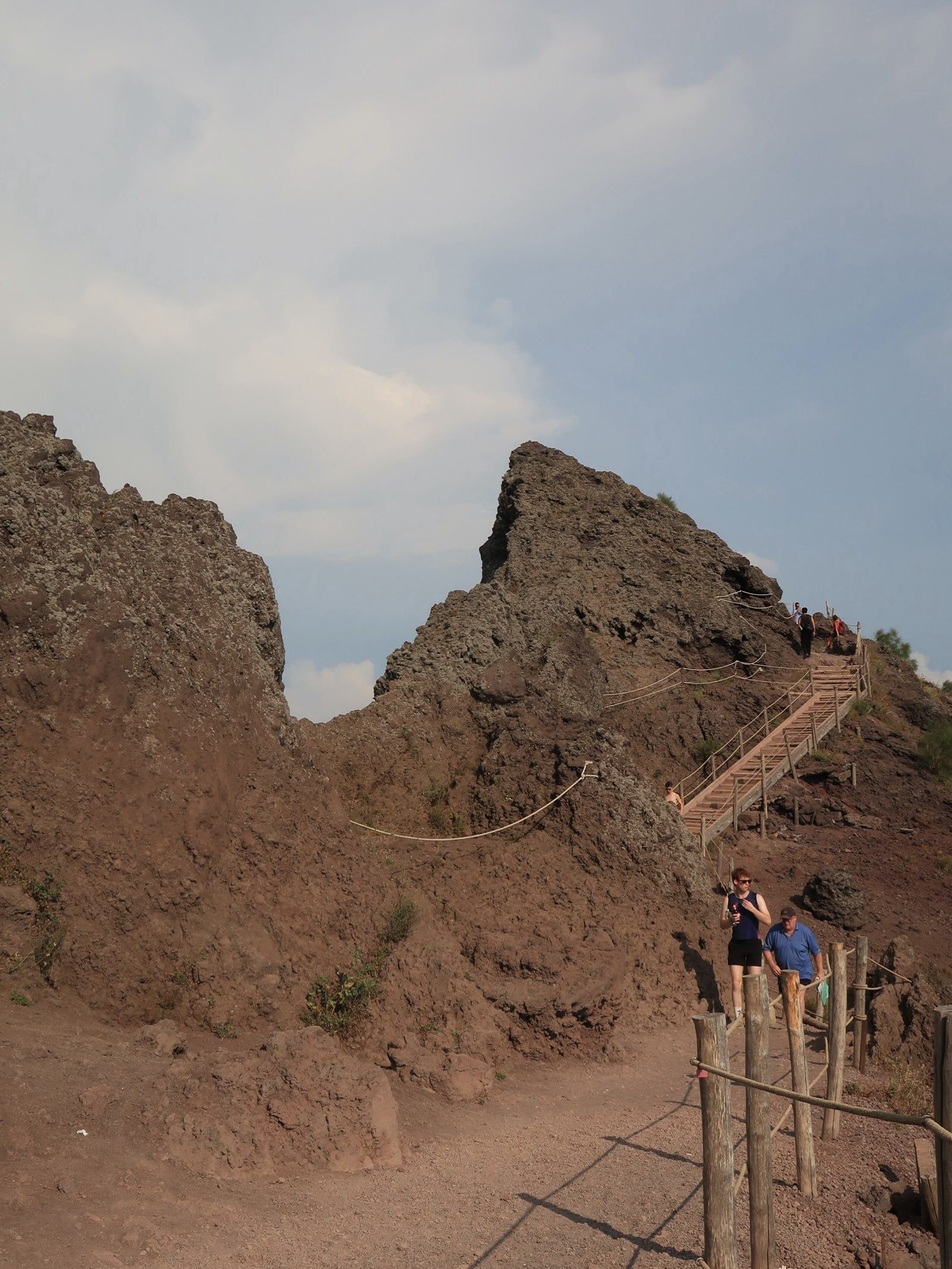
The Valle del Gigante separates the modern cone from the ancient Mount Somma caldera ridge. Walk through this gap to step directly onto layered lava flows and ash deposits left by eruptions between 1631 and 1944. Mount Somma's 1,132-metre peak towers above.
Visit between April and June to see the stark grey slopes covered in yellow broom and purple valerian. The bright blooms break up the barren landscape. This is the best window to hike, keeping you out of the intense summer heat.
Choose an itinerary starting at $77 with round-trip transport, skip-the-line entry, and free cancellation up to 24 hours before departure.
Swipe to see more
 Free Cancellation 12h
  Free Cancellation 8h
  Free Cancellation 8h
  Free Cancellation 8h Free Cancellation 8h Free Cancellation 8h
  Free Cancellation 8h
  Free Cancellation 8h Free Cancellation 8h
  Free Cancellation 7h Free Cancellation 8h Free Cancellation 8h Free Cancellation 8h
  Free Cancellation 8h
  Free Cancellation 9h
  Free Cancellation 8h 30min
  Free Cancellation
  Free Cancellation
  Free Cancellation
  Free Cancellation 8h 30min
 May, June, and September offer the best balance of mild temperatures, manageable crowds, and blooming wildflowers along the crater trail. Avoid July and August due to intense heat and maximum daily visitor caps.
Yellow broom and purple valerian carpet the dark volcanic ash starting in April. Temperatures stay cool enough for the exposed climb. Trail hours extend to 17:00 by mid-spring.
June provides excellent hiking before peak heat hits. July and August bring intense sun, zero shade, and daily caps of 3,240 hikers. Book the 9:00 am slot to beat the tour buses.
September delivers mild weather and thinner crowds. October remains pleasant. By November, the park shifts to a 15:00 closing time and rain frequently shuts down the slippery ash trails.
The crater path closes at 15:00. Snow, heavy rain, and gale-force winds regularly force complete park closures. The unpaved gravel switchbacks turn dangerously slick in bad weather.
The Gran Cono trail opens at 9:00 am every day. Closing times shift with the seasons. Expect a 15:00 close in winter (January, February, November, December). March and October push this to 16:00. From April through June and in September, the gates shut at 17:00. Peak summer months of July and August run until 18:00. You must exit the trail within an hour of your final permitted entry time. The automated gates at Piazzale Quota 1000 and Quota 1050 allow you to scan in up to 40 minutes before your time slot, or up to two hours after. Bad weather shuts the mountain down. If regional authorities issue an orange alert for rain, high winds, or snow, the trail closes entirely.
| Category | Price |
|---|---|
| General Admission | €11.68 (includes mandatory €1.68 online fee) |
| Reduced (Under 25 with ID, park municipality residents) | €9.55 (includes mandatory €1.55 online fee) |
| Children under 6, disabled visitors plus one carer, accredited journalists, official guides | Free |
You cannot buy a ticket on the mountain. The trailhead lacks a ticket office entirely, so you must purchase a timed-entry slot online before you arrive. The park caps access at 360 hikers per hour. If you show up without a pre-booked digital or printed ticket, you will be turned away.
For complete schedules and ticket prices, visit our Hours & Fees page.
Most travelers reach the crater trailhead by taking the Circumvesuviana commuter train from Naples or Pompeii, then transferring to a local bus or shuttle for the final climb. Driving is possible, but you'll have to park in municipality-managed lots below the summit.
📍 Piazzale Quota 1000, Strada Provinciale Ercolano-Vesuvio
Catch the Circumvesuviana train from Napoli Garibaldi heading toward Sorrento. Get off at the Ercolano Scavi station. From there, hop on the Vesuvio Express shuttle bus. It departs roughly every 40 minutes and climbs directly to the 1,000-meter altitude trailhead at Piazzale Quota 1000. This is the most common route for day-trippers coming from Naples.
Start at the Pompei Villa dei Misteri station, which you can reach via the Circumvesuviana from Naples or Sorrento. Catch EAV Bus No. 808 up to the trailhead. Departures run every 60 to 120 minutes depending on the time of day. This route pairs easily with a morning spent exploring the Pompeii ruins.
Drive the A3 motorway toward Ercolano or Torre del Greco. Connect to the Strada Provinciale Ercolano-Vesuvio and follow the switchbacks up the volcano. You can't park directly at the Piazzale Quota 1000 trailhead. Instead, leave your car in one of the privately managed municipality lots along the approach road and walk the rest of the way.
Hire a cab straight from the Ercolano Scavi train station or the Herculaneum archaeological site. The driver will take you the 8 kilometers up to the volcano's parking area. Finding a return taxi can be tough once you finish your hike. Always negotiate the fare and arrange a specific pickup time before you leave the station.
For detailed transport options and routes, visit our Directions page.
Don't expect to buy admission at the gate. There is no ticket office at the trailhead. You have to book your slot online in advance. The park caps entry at 360 hikers per hour, and summer slots sell out fast. If you miss out, 20% of tickets drop one hour before each time slot.
Locals follow a simple rule before heading up. If clouds cover the peak when you look up from the base, reconsider your timing. A cloud-covered crater means a white-out at the top. You won't see the 300-metre drop or the Bay of Naples.
The 1.5-kilometer trail consists of loose volcanic ash and gravel. Don't wear sandals. Small rocks will constantly work their way under your feet. Wear sturdy trainers or hiking boots to handle the steep, slippery sections.
Get to the Piazzale Quota 1000 gate right at 9:00 am. Early mornings offer the clearest views of the Tyrrhenian Sea and the islands below. You also beat the intense midday heat on the exposed, shadeless slopes. Tour buses usually arrive later in the day.
Pack your own water and snacks for the hike. The mountain lacks full dining facilities, though a small shop at the trailhead sells coffee. Vendors there will offer you a wooden walking stick. These are rentals. Expect to pay a few euros when you hand it back.
Visit Herculaneum or Pompeii right after your hike. The Vesuvio Express shuttle and EAV Bus 808 connect the volcano directly to the buried Roman towns. These transit connections run until about 3:00 pm. The logistics make a combined itinerary easy.
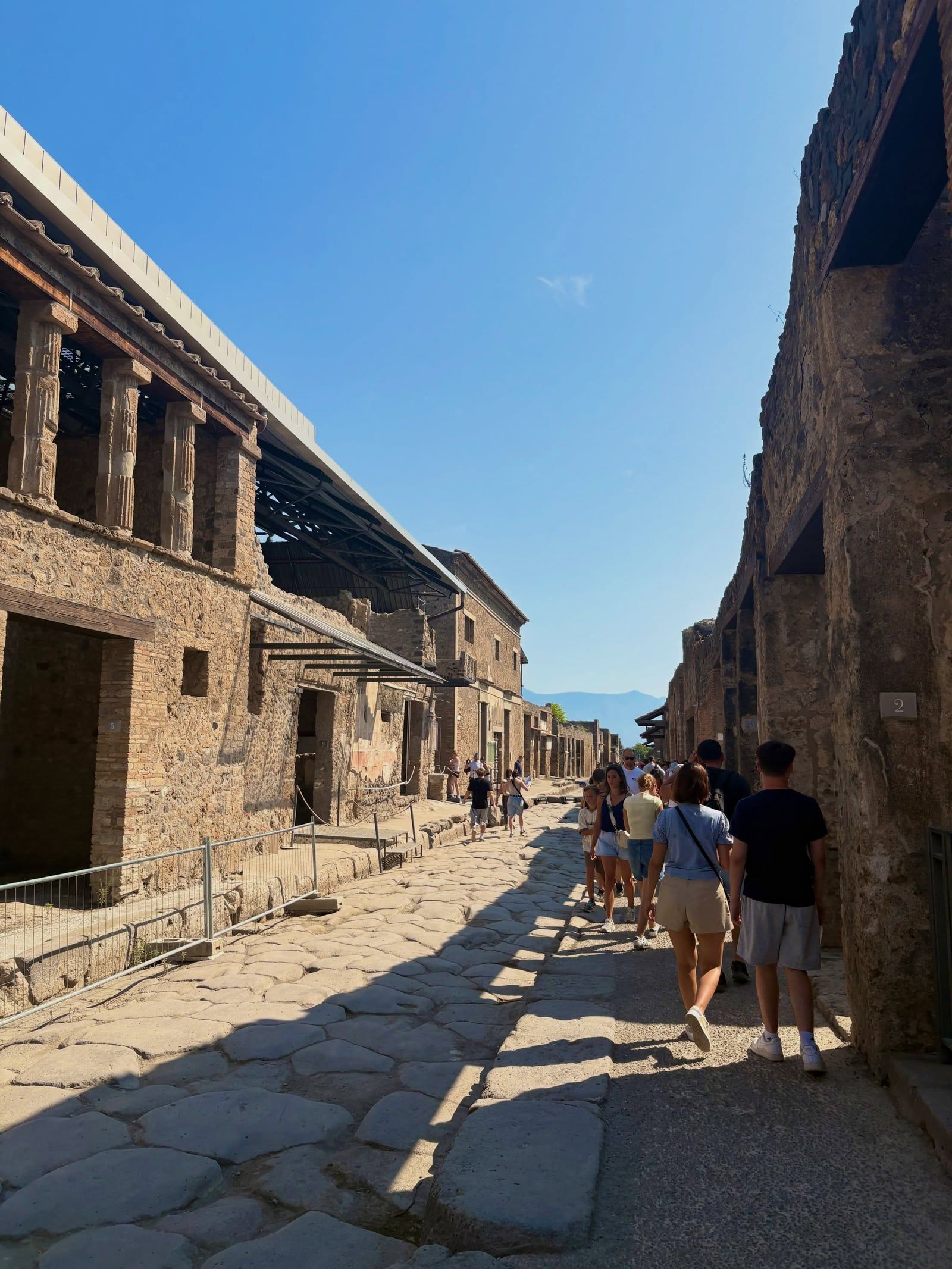
The 79 AD eruption froze this Roman city in time, leaving behind intact streets, the House of the Faun, and plaster casts of the victims. Walk through the sprawling Forum. It pairs easily with a morning crater hike.
Mud and ash buried Herculaneum, preserving multi-story wooden structures, intact roofs, and vivid frescoes far better than the pumice at Pompeii. An overhead viewing platform lets you see the entire excavated town at once. It takes less time to explore.
Ferdinand II of Bourbon founded the world's first volcano monitoring institute here in 1841. The building now operates partly as a museum displaying historic seismographs and volcanic rock samples. Stop here on your drive down the mountain.
Read what travelers share about their experience visiting Mount Vesuvius — from practical tips to personal highlights.
Planning advice, comparisons, and practical tips.
Pompeii's ruins and Vesuvius's crater sit close enough together that thousands of travelers stitch them into a single day trip out of Naples every…
Mount Vesuvius has produced at least 54 confirmed eruptions since the last Ice Age, though the one everyone means is 79 AD, when it buried Pompeii…
Fifteen minutes above the ticket gate, the gravel path swings around a ridge and the crater opens up: a grey scar 450 metres across, dropping 300…
A standard ticket for the Gran Cono crater trail costs €11.68, which includes the mandatory online booking fee. You have to buy this in advance through the official park website. There is no ticket office at the gate.
The round trip on the main trail takes about one to two hours. Park rules strictly cap your time on this specific route at two hours. Plan for a half-day total if you are coming from Naples or Pompeii.
Take the Circumvesuviana train from Napoli Garibaldi to Ercolano Scavi station, which takes 20 to 30 minutes. From there, catch the Vesuvio Express shuttle bus up to the trailhead at Piazzale Quota 1000. The combined transit costs about €20.
Gates open at 9:00 am every day. Closing times shift with the seasons, ranging from 3:00 pm in the winter months to 6:00 pm in July and August. You must exit the trail within an hour of the last entry slot.
Wear closed-toe hiking shoes or trainers with solid grip. The path is covered in loose volcanic ash and gravel that easily slips into sandals and makes walking unstable.
The 1.5 km path lacks stairs, but the loose gravel and steep sections make standard wheelchairs impractical without heavy assistance. Specialized tour operators offer motorized options and barrier-free transport to the rim. Disabled visitors and one carer receive free entry with valid documentation.
No, arriving without a pre-purchased digital or printed ticket means park staff will turn you away. The park caps entry at 360 hikers per hour. Only 20 percent of daily tickets are held for last-minute online purchases starting an hour before each time slot.
Yes, pack a windbreaker or light layer. The trailhead sits at 1,000 meters above sea level, making it noticeably cooler and windier than the cities below. You will also need sunscreen and a hat since the volcanic slopes offer zero shade.
Browse verified tours with free cancellation and instant confirmation.
Find Tours