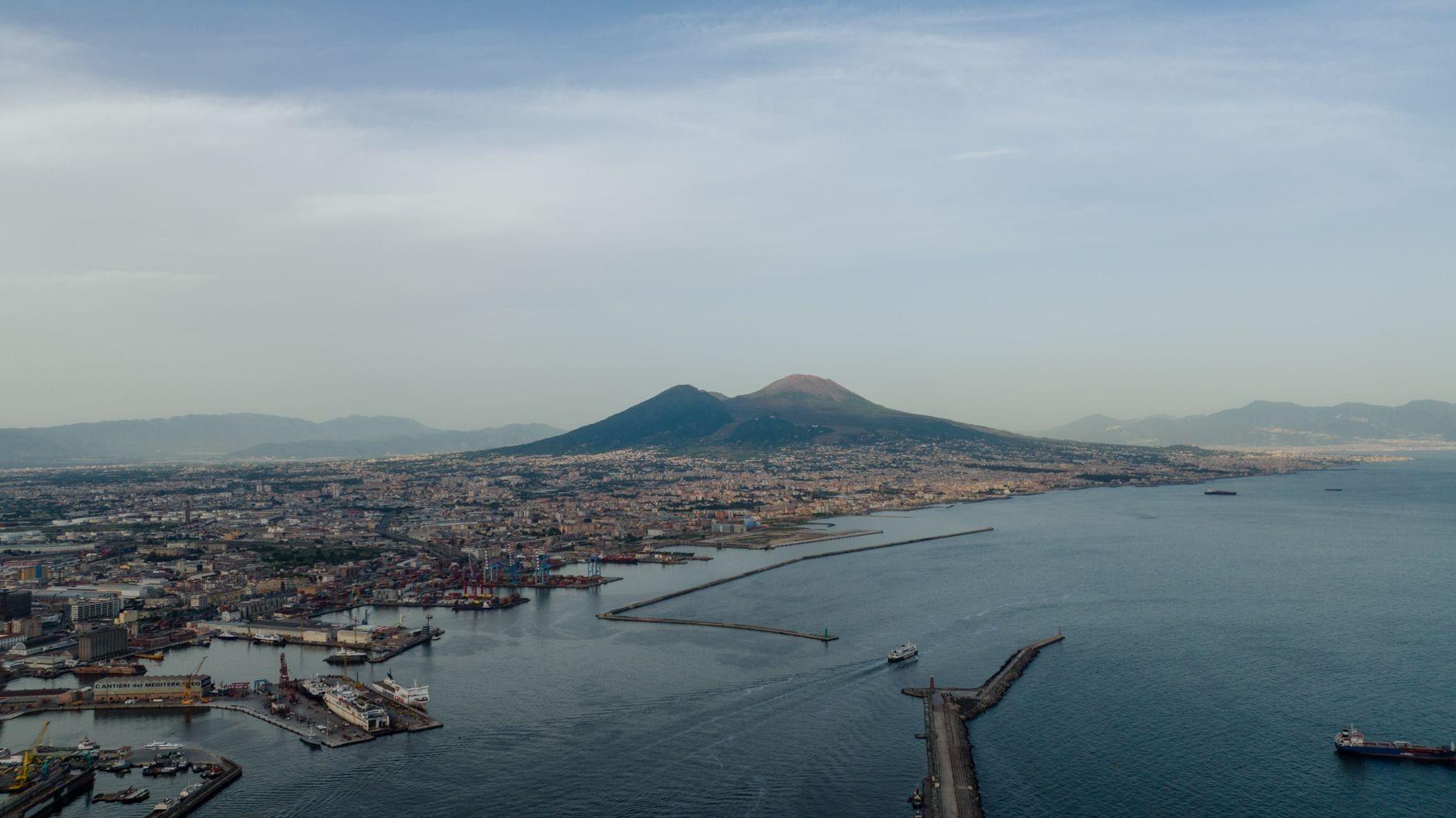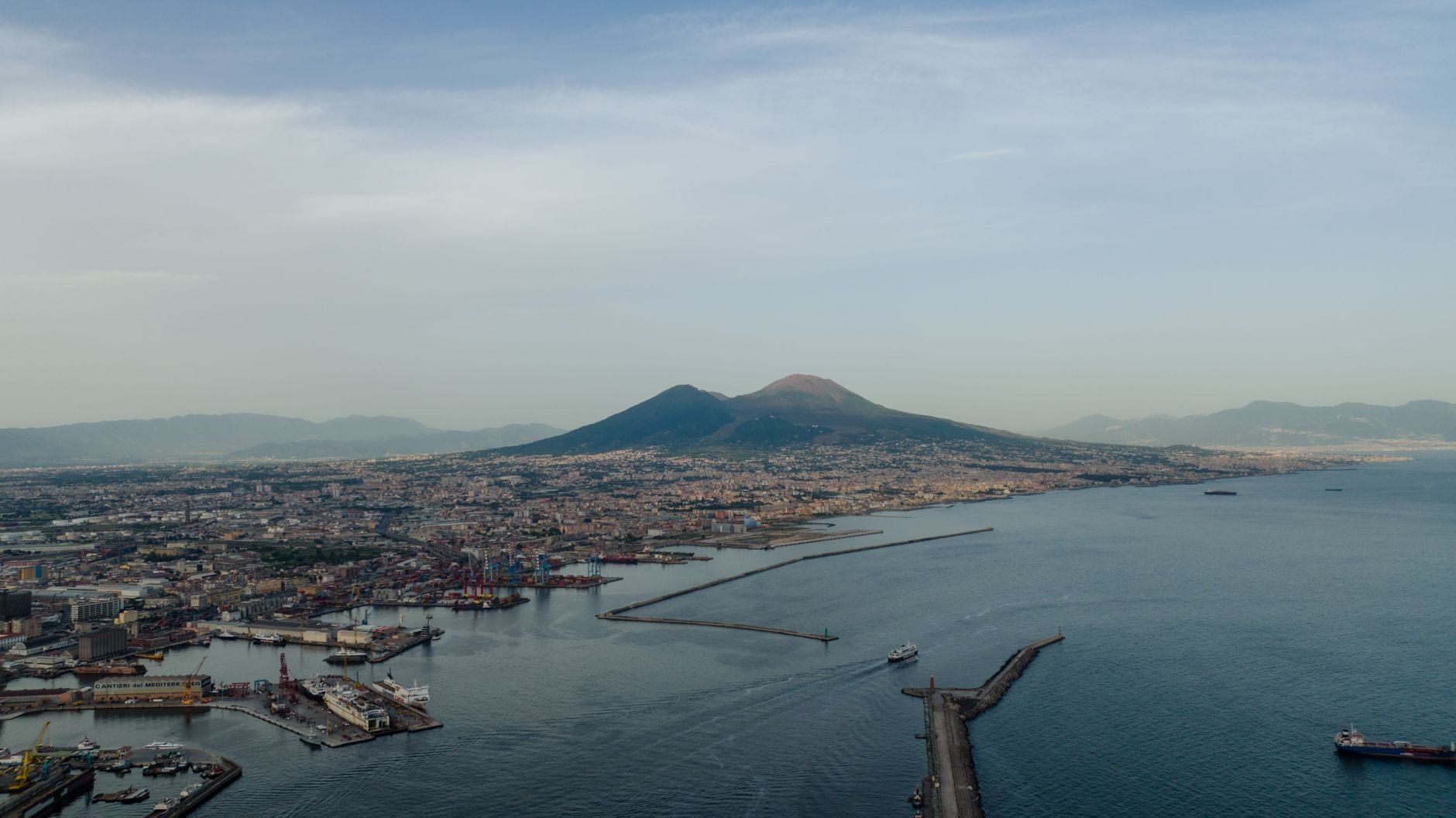
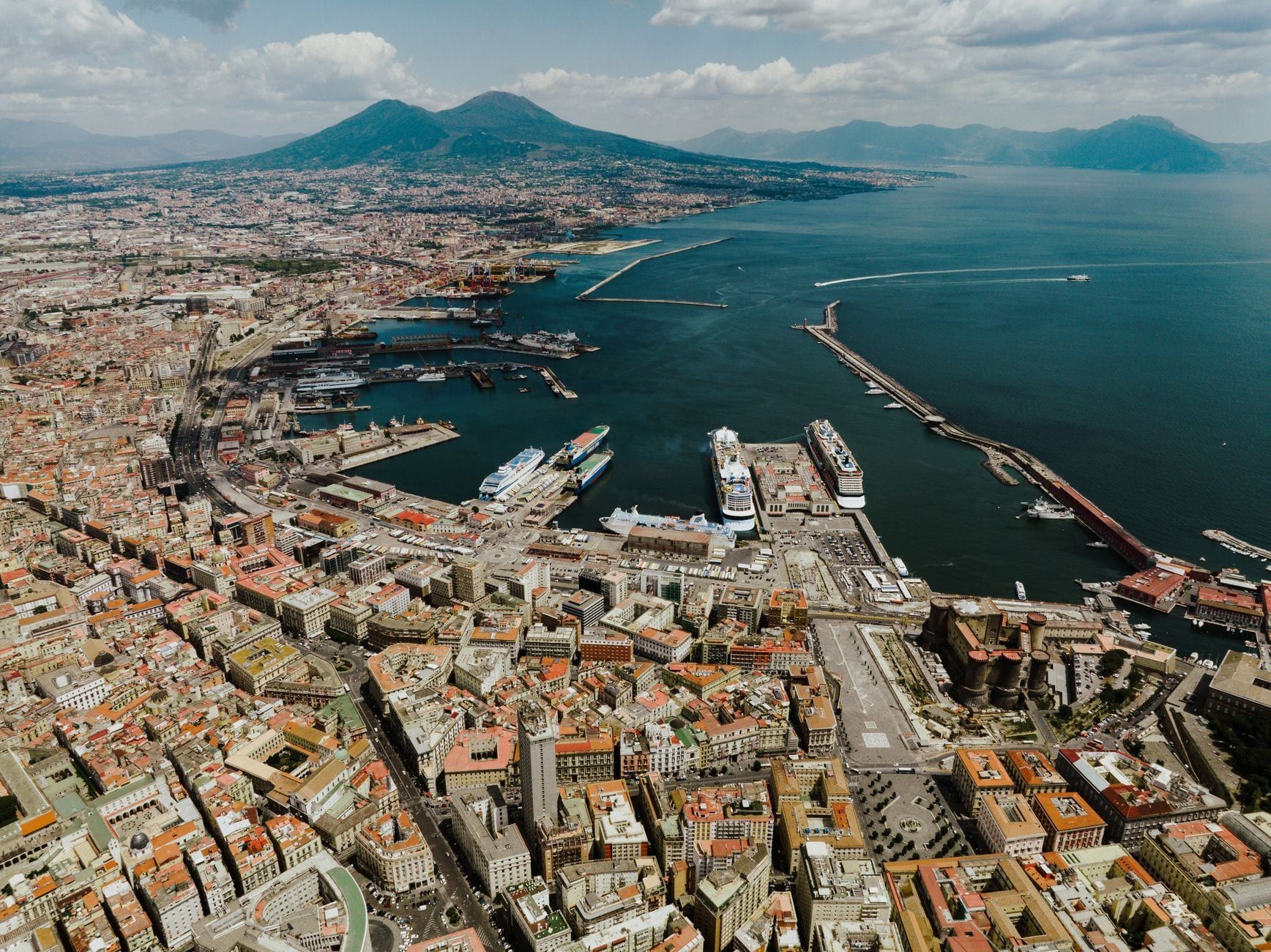
Mount Vesuvius has produced at least 54 confirmed eruptions since the last Ice Age, though the one everyone means is 79 AD, when it buried Pompeii and Herculaneum under volcanic debris in under a day. The volcano last erupted in March 1944, and it hasn't gone quiet so much as gone monitored — seismographs and gas sensors around the crater track it around the clock. Knowing what it has done is the best guide to what it might do again.
This timeline runs from the geological forces that built the mountain through every major eruption on record, then answers the question most travelers actually ask before booking a ticket: is it safe to stand at the rim today. Short answer: yes, under normal conditions, and the Vesuvius National Park authorities keep close enough watch that surprises aren't part of the plan.
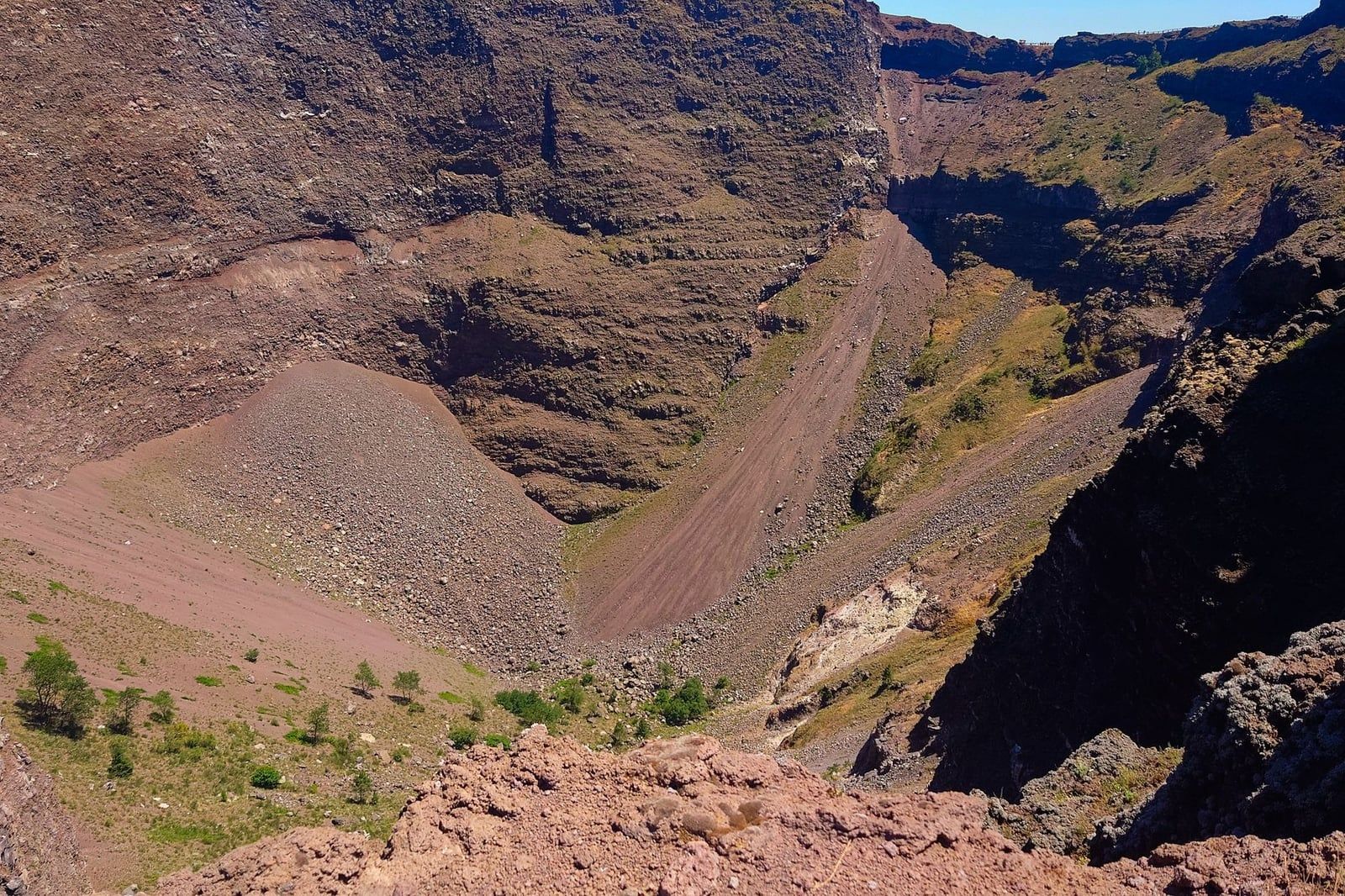
Vesuvius at a Glance
- Location: on the Bay of Naples, about 9 km (5.6 mi) east of Naples, Campania
- Elevation: 1,281 m (4,203 ft) — the number shifts after major eruptions reshape the cone
- Type: somma-stratovolcano, part of the Campanian volcanic arc
- Age: the current cone is about 17,000 years old; volcanism here dates back 300,000-400,000 years
- Last eruption: 17-23 March 1944
- Status: active and continuously monitored, classified a Decade Volcano
That Decade Volcano label comes from population, not fury: roughly 3 million people live close enough to be affected by a major eruption, and about 700,000 sit inside the official red zone nearest the crater. How many times has it actually gone off? Depends who's counting. The Smithsonian's Global Volcanism Program logs 54 confirmed eruptions across the Holocene epoch, while volcanologists at Oregon State put the number since 79 AD alone at roughly three dozen. Either way, this isn't a mountain that erupts once a century and calls it done.
Why Vesuvius Erupts: Formation & Geology
Vesuvius sits above a subduction zone where the African plate slides beneath the Eurasian plate, part of a chain of volcanoes called the Campanian volcanic arc. That collision drives magma upward through the crust, and Vesuvius taps a reservoir sitting roughly 8 km below the surface — shallow enough that pressure can build fast once the system stirs.
The mountain you see today is really two volcanoes nested together. Mount Somma is the older cone; its caldera collapsed around 17,000-18,000 years ago in a massive eruption, and the younger Gran Cono grew up inside that collapsed rim afterward, including a major growth spurt during the 79 AD eruption. Somma's horseshoe ridge still wraps around the northern side of the modern peak, separated from it by the Valle del Gigante.
What makes Vesuvius dangerous rather than merely active is its chemistry. Magma here runs silica-undersaturated and rich in potassium, producing phonolite in the most violent eruptions — a composition that traps gas instead of releasing it gradually. Rather than the slow lava flows you'd get from a shield volcano, Vesuvius tends to build pressure until it lets go all at once, in the towering explosive columns known as Plinian eruptions.
The 79 AD Eruption That Buried Pompeii, Hour by Hour
Seventeen years before the eruption, a powerful earthquake in 62 AD cracked open buildings across Pompeii and Herculaneum. Repairs were still underway when the ground began shaking again, this time as a prelude. Nobody in the region had seen Vesuvius erupt within living memory, so nobody knew what the shaking meant.
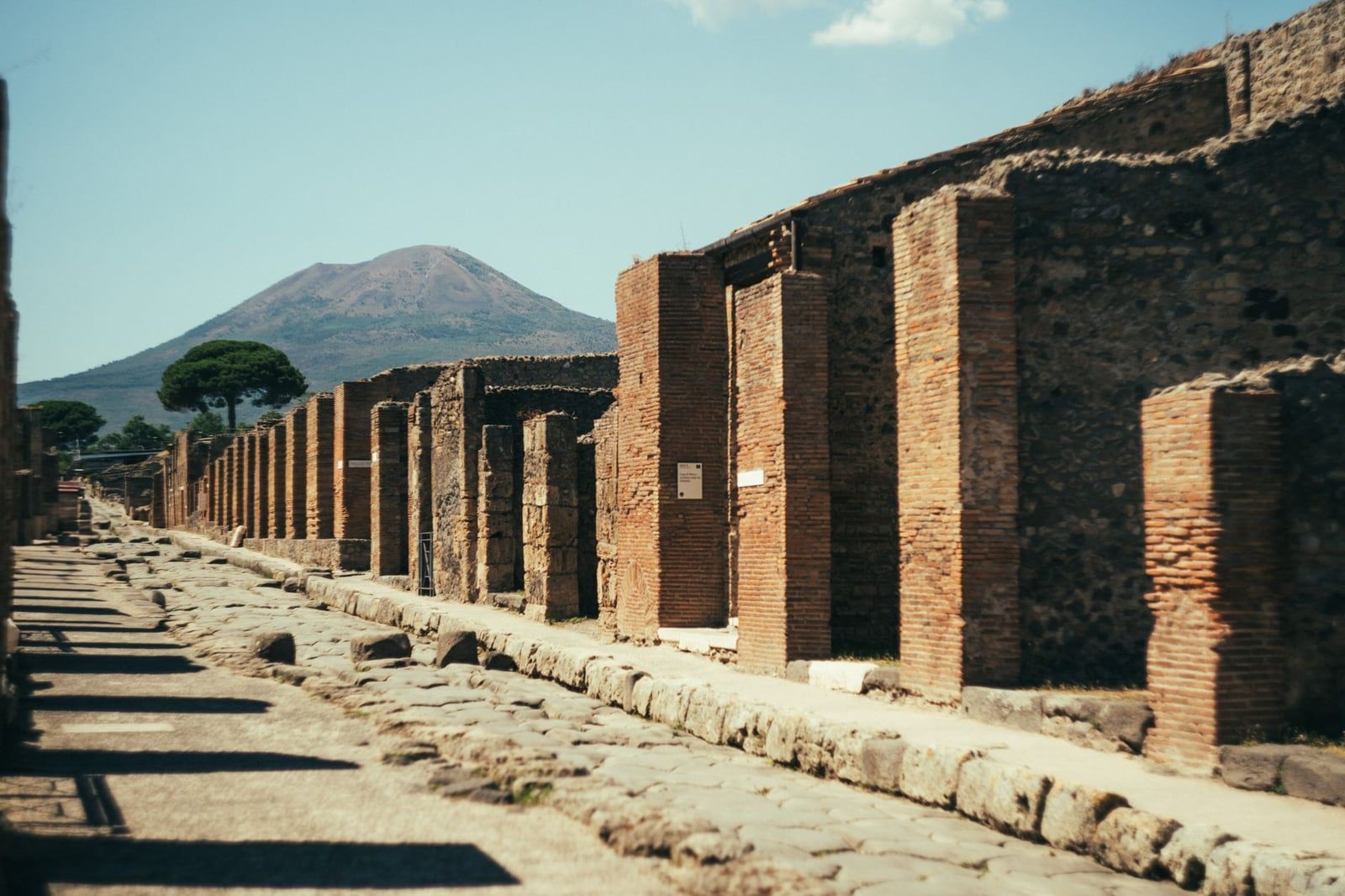
On the day itself, the mountain sent a column of ash, pumice and gas roughly 33 km (21 mi) into the sky, ejecting material at something like 600,000 cubic metres per second at its peak. Pompeii, downwind, spent the next 18 to 19 hours getting buried under a steady rain of pumice and ash, roofs collapsing under the weight before fast-moving pyroclastic surges finished the job toward the following dawn.
Herculaneum, closer to the volcano but on the other side of the wind, died faster. Pyroclastic flows there hit roughly 400°C and moved at close to 100 km/h, killing anyone in their path within minutes and burying the town in volcanic material inside about two hours. That heat is also why Herculaneum preserved wood, cloth and food that Pompeii's slower burial destroyed.
Almost everything known first-hand comes from Pliny the Younger, then 17, who watched the eruption from across the Bay of Naples at Misenum and later wrote two letters describing it to the historian Tacitus. His uncle, Pliny the Elder, commanded the Roman fleet and sailed toward the eruption to attempt a rescue, only to die at Stabiae. Volcanologists still use the term 'Plinian eruption' for this kind of sustained, high-column explosive event, named for the nephew who documented it.
More than 1,000 victims have been found at Pompeii and the surrounding area, though the true toll is unknown; regional estimates for the eruption as a whole range up into the thousands. Even the date is disputed — the traditional account puts it on 24 August, but excavated bodies wearing heavier clothing and stores of autumn produce have pushed some researchers toward October or November instead. Anyone wanting the fuller picture of what's left to see should check our Pompeii day trip guide.
Every Major Vesuvius Eruption Since 79 AD (Timeline Table)
79 AD is the eruption everyone remembers, but Vesuvius kept erupting for the next 1,800-plus years, in cycles that varied wildly in scale. A full accounting would run to 54 entries, most of them minor; here are the ones that mattered.
| Year(s) | Character | Impact |
|---|---|---|
| 79 AD | Plinian eruption, VEI 5 | Buried Pompeii, Herculaneum and Stabiae; 1,000+ confirmed deaths |
| 472 AD | Major explosive eruption | One of the first big post-79 AD blasts; ash fell as far as Constantinople |
| 1631 | Major explosive eruption | ~3,000-4,000 deaths; lava reached the coast |
| 1906 | Large eruption, new crater formed | Villages destroyed; over 100 deaths; international relief sent |
| 1913-1944 | Long eruptive cycle | Three decades of near-continuous minor activity |
| 1944 (17-23 March) | Lava fountains up to 800 m | San Sebastiano al Vesuvio destroyed; ~7,000 evacuated; ~26 deaths |
Between the big ones, Vesuvius rarely stayed fully quiet. Records mention activity in 172, 512, 685, 787, 968 and 1037, and after 1631 the mountain settled into near-continuous eruptive cycles, with notable blasts in 1660, 1694, 1707, 1737, 1760, 1779, 1794, 1822, 1850, 1861 and 1872. Of the 53 Holocene eruptions rated for severity, most — 29 of them — come in at VEI 3, strong but local; 8 reach VEI 4, and 5 reach VEI 5, the same class as 79 AD.
The 1631 eruption is the deadliest of the modern era: an explosive blast killed an estimated 3,000-4,000 people and sent lava flows all the way to the coast. It also kicked off a longer pattern — for the next three centuries Vesuvius was rarely dormant for long, unlike the relative quiet that had followed 79 AD. The 1906 eruption tore open a new crater and flattened villages on the slopes, and the 1913-1944 cycle then ran, on and off, for three decades before ending in the eruption anyone alive today could actually have witnessed.
That last eruption began on 17 March 1944 and ran for six days. Lava fountains shot up to 800 m, flows destroyed the town of San Sebastiano al Vesuvio, and around 7,000 residents were evacuated; roughly 26 people died despite that evacuation. Vesuvius has been silent at the surface ever since — more than 80 years and counting.
Will Vesuvius Erupt Again? Monitoring & Future Risk
Almost certainly, yes. Vesuvius is active, not dormant in any permanent sense, and geologists consider it overdue given how long it's been since 1944 compared with past intervals between major eruptions. That doesn't mean anything is imminent. It means the mountain is capable, and nobody can put a date on it.
The Vesuvius Observatory, founded in 1841 as the world's first purpose-built volcano-monitoring institute, still tracks the mountain today alongside Italy's national geophysics institute. Instruments watch for micro-earthquakes, changes in gas emissions from the summit fumaroles, and ground deformation that would signal magma moving closer to the surface. None of those signals is currently trending toward an eruption.
The stakes explain why the monitoring matters. Roughly 700,000 people live inside the official red zone closest to the volcano, and the wider at-risk population reaches into the millions across the Naples metropolitan area. Italy's Civil Protection Department maintains a plan to evacuate the red zone within about 72 hours of the first serious warning signs — a plan that depends entirely on the observatory catching those signs early.
That's a lot of people to move quickly. So far, the mountain has given scientists no reason to rehearse it.
Is It Safe to Visit Vesuvius Today?
Yes, under normal conditions. The crater trail — Trail No. 5 up to the Gran Cono — is open to the public every day of the year, and the park sells timed tickets online rather than running a walk-up gate. Full admission runs about €10, with a reduced €8 rate for under-25s; check current opening hours and prices before you go, since seasonal hours shift through the year.
Closures happen, but weather causes almost all of them. High wind, heavy rain or snow can shut the trail on short notice, because loose volcanic ash turns treacherous underfoot, and Italy's Civil Protection authority can suspend ticketing the moment it issues an orange-level weather alert. That's a storm, not a magma warning.
If Vesuvius ever moved toward a real eruption, the warning would show up on instruments — earthquakes, gas readings, ground swelling — long before it showed up on the trail. Scientists don't expect a surprise here; they expect weeks of buildup they can watch happen. Getting to the crater is straightforward too: see our directions and transport guide for the train-and-shuttle route from Naples.
Pair the hike with the ruins it created. Pompeii and Herculaneum sit 20-30 minutes below the trailhead, and most visitors do both in a single day. If you'd rather have someone else handle tickets and transport, a guided Vesuvius and Pompeii tour bundles the crater climb with skip-the-line entry to the ruins.
Frequently asked questions
How many times has Mount Vesuvius erupted?
It depends on the count. The Smithsonian's Global Volcanism Program lists 54 confirmed eruptions during the Holocene epoch, while volcanologists at Oregon State put the number since 79 AD alone at roughly three dozen. Either figure makes clear this isn't a volcano that erupts rarely.
When did Mount Vesuvius last erupt?
17-23 March 1944, at the end of an eruptive cycle that had run, on and off, since 1913. There's been nothing since — more than 80 years of quiet at the surface, even though the volcano beneath it is still very much alive.
Will Mount Vesuvius erupt again?
Almost certainly. It's an active volcano, and geologists consider it overdue based on past intervals between major eruptions. The Vesuvius Observatory and Italy's Civil Protection authority monitor it continuously for the earthquakes, gas changes and ground swelling that would precede any new activity.
What was the deadliest Vesuvius eruption?
79 AD is the deadliest and most famous, though its toll is uncertain: more than 1,000 confirmed remains, with regional estimates running into the thousands. Among well-documented modern eruptions, 1631 is the worst, killing an estimated 3,000-4,000 people and sending lava as far as the coast.
Is it safe to visit Mount Vesuvius today?
Yes, under normal weather and volcanic conditions. The crater trail is managed by Vesuvius National Park with timed online tickets (about €10), and it closes almost exclusively for storms and high wind rather than for eruption risk.
What is a 'Plinian eruption' and why is it named after Vesuvius?
It's named for Pliny the Younger, who watched the 79 AD eruption from across the Bay of Naples and described it in two letters to Tacitus after his uncle, Pliny the Elder, died attempting a rescue. The term now describes any eruption with a sustained, high-altitude explosive column like the one that buried Pompeii.
How tall is Mount Vesuvius and does its height change?
It stands 1,281 m (4,203 ft) as of the most recent measurement. That number does shift over time, because major eruptions in 1631 and 1944 reshaped the summit cone, the Gran Cono, by adding or removing material at the top.
How many people would be at risk if Vesuvius erupted again?
Roughly 700,000 people live inside the officially defined red zone closest to the volcano, and estimates for the wider affected population run into the millions across the Naples area. Italy's evacuation plan is built to clear the red zone within about 72 hours of a serious warning.
Sources
- en.wikipedia.org/wiki/Mount_Vesuvius
- en.wikipedia.org/wiki/Eruption_of_Mount_Vesuvius_in_79_AD
- britannica.com/place/Vesuvius
- parconazionaledelvesuvio.it/en
- protezionecivile.gov.it/en/approfondimento/national-civil-protection-plan-volcan
- volcano.oregonstate.edu/faq/what%E2%80%99s-most-recent-eruption-vesuvius-and-wil