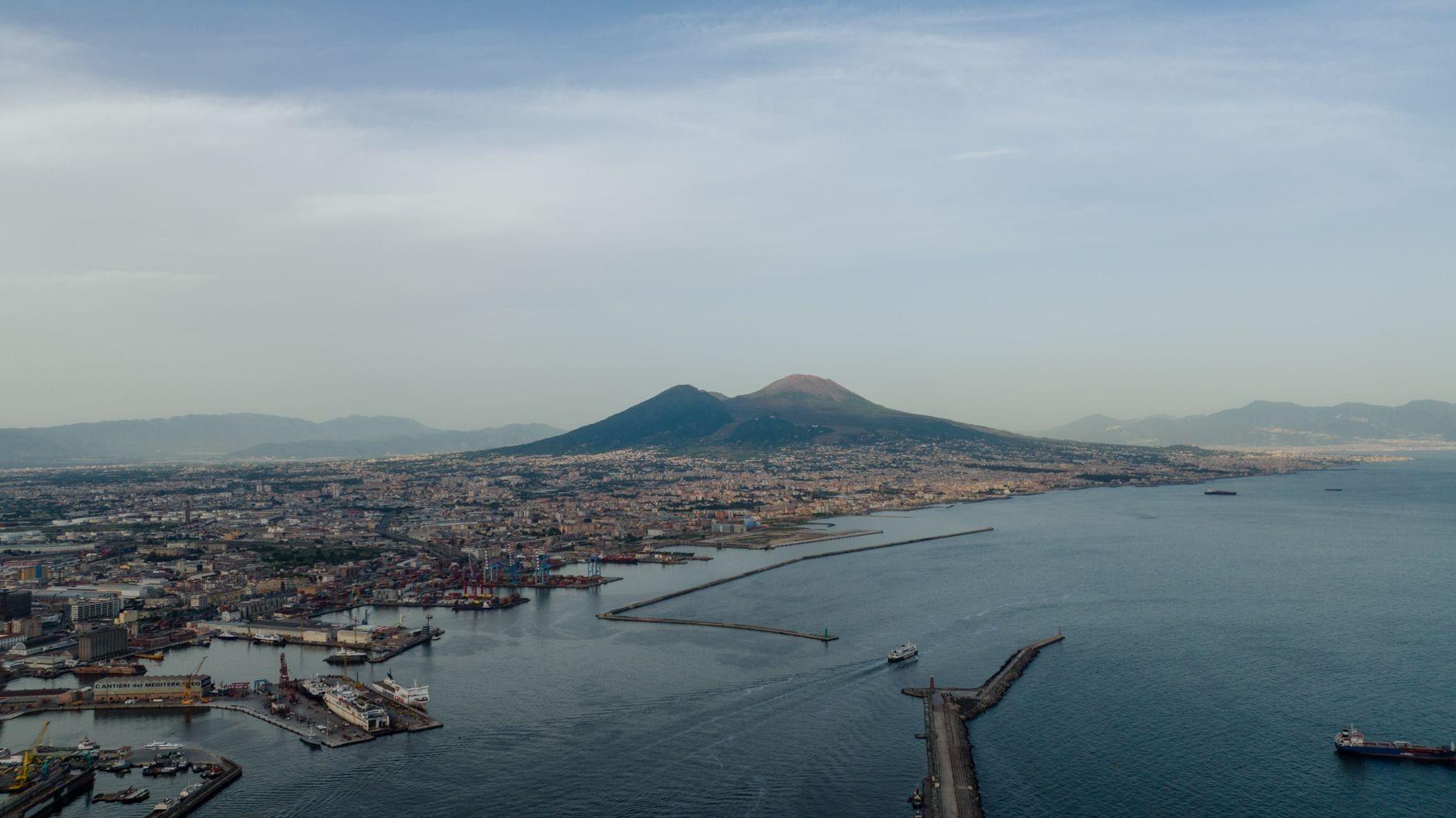
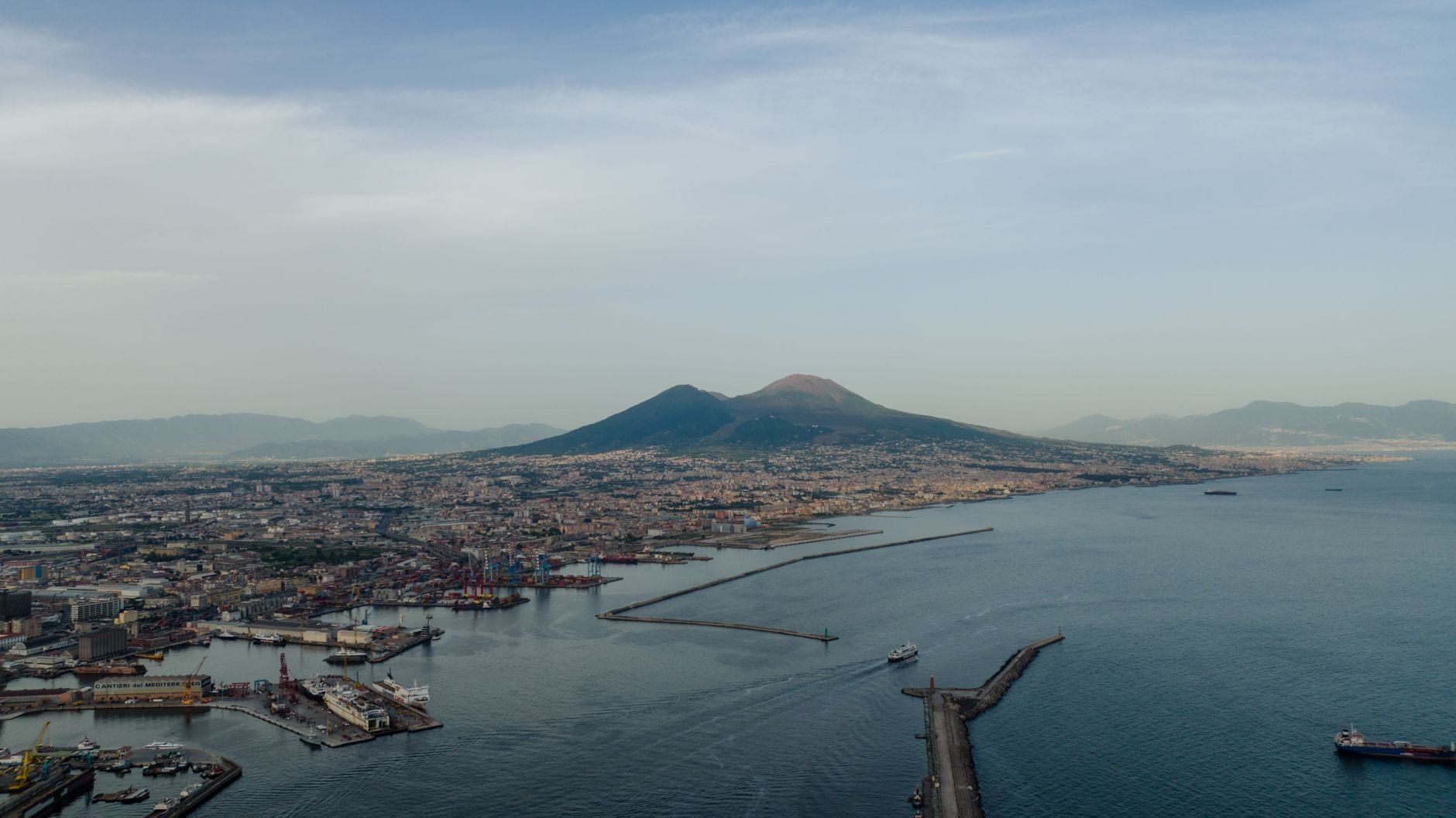
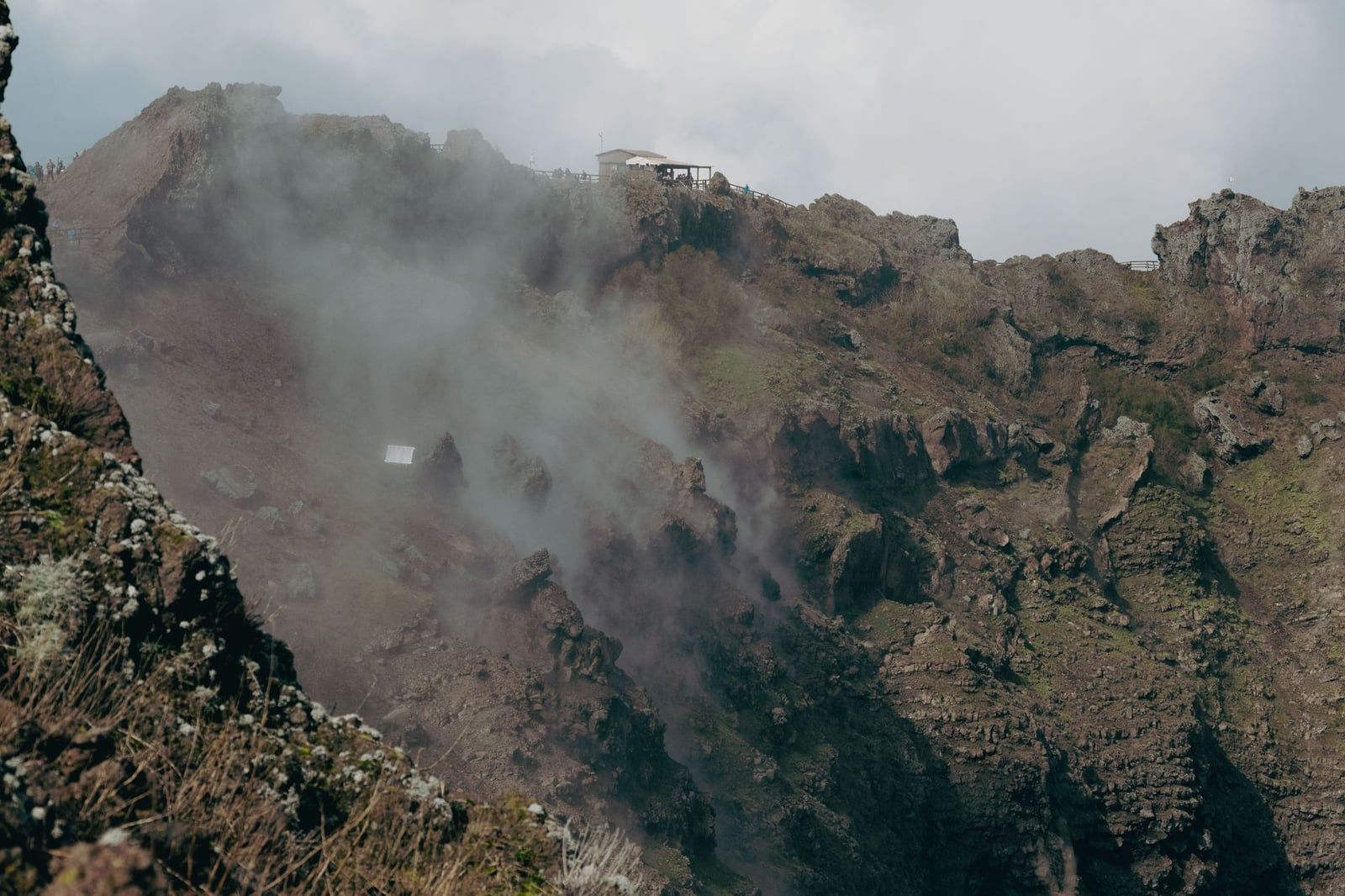
Fifteen minutes above the ticket gate, the gravel path swings around a ridge and the crater opens up: a grey scar 450 metres across, dropping 300 metres down, with thin ribbons of steam leaking from cracks in the rock. That's the payoff of hiking Mount Vesuvius, and it takes most people under two hours round trip.
Nearly everyone who searches for Mount Vesuvius hikes means that one route: Trail No. 5, up to the Gran Cono. But the volcano's national park has eleven marked trails covering 54 km of ash slope, pine forest and old lava flow, and a few are worth a full day if you've got a car and time to spare. This guide covers the crater trail in detail, the other ten routes, current ticket prices and hours, how hard it really is, and the fastest way to reach the trailhead from Naples, Pompeii or Sorrento.
Mount Vesuvius Hikes at a Glance
One trail needs a ticket; ten don't. Trail No. 5, the Gran Cono, is the short paid route to the crater rim that draws almost every visitor. The park's other ten trails are free, unguided, and spread across the mountain's forests and older lava fields — most take half a day or more and see a fraction of the foot traffic.
| Trail | Distance | Duration | Difficulty | Start Point |
|---|---|---|---|---|
| Gran Cono (Trail No. 5) | ~3 km round trip | 1-2 hours (capped at 2 hrs) | Moderate | Piazzale Quota 1000, Ercolano |
| Other 10 park trails (combined) | 1-14 km each | 30 min to 7 hours | Easy to difficult | Various — Ottaviano, Ercolano, Terzigno |
Got half a day from Naples or Pompeii? Gran Cono is the only trail that makes sense — it's the one with the view everyone's after. A full day with a rental car opens up the other ten, from a flat wheelchair-friendly forest loop to a seven-hour ridge trek past 1944 lava flows.
The Gran Cono Crater Trail: The Hike Almost Everyone Means
The Gran Cono trail runs about 1.5 km from the Piazzale Quota 1000 trailhead to the crater rim — call it 3 km there and back — climbing roughly 280 metres from the 1,000-metre car park to just over 1,281 metres at the summit. Park rules cap the round trip at two hours, though most fit walkers do it in about 90 minutes including a stop at the rim.
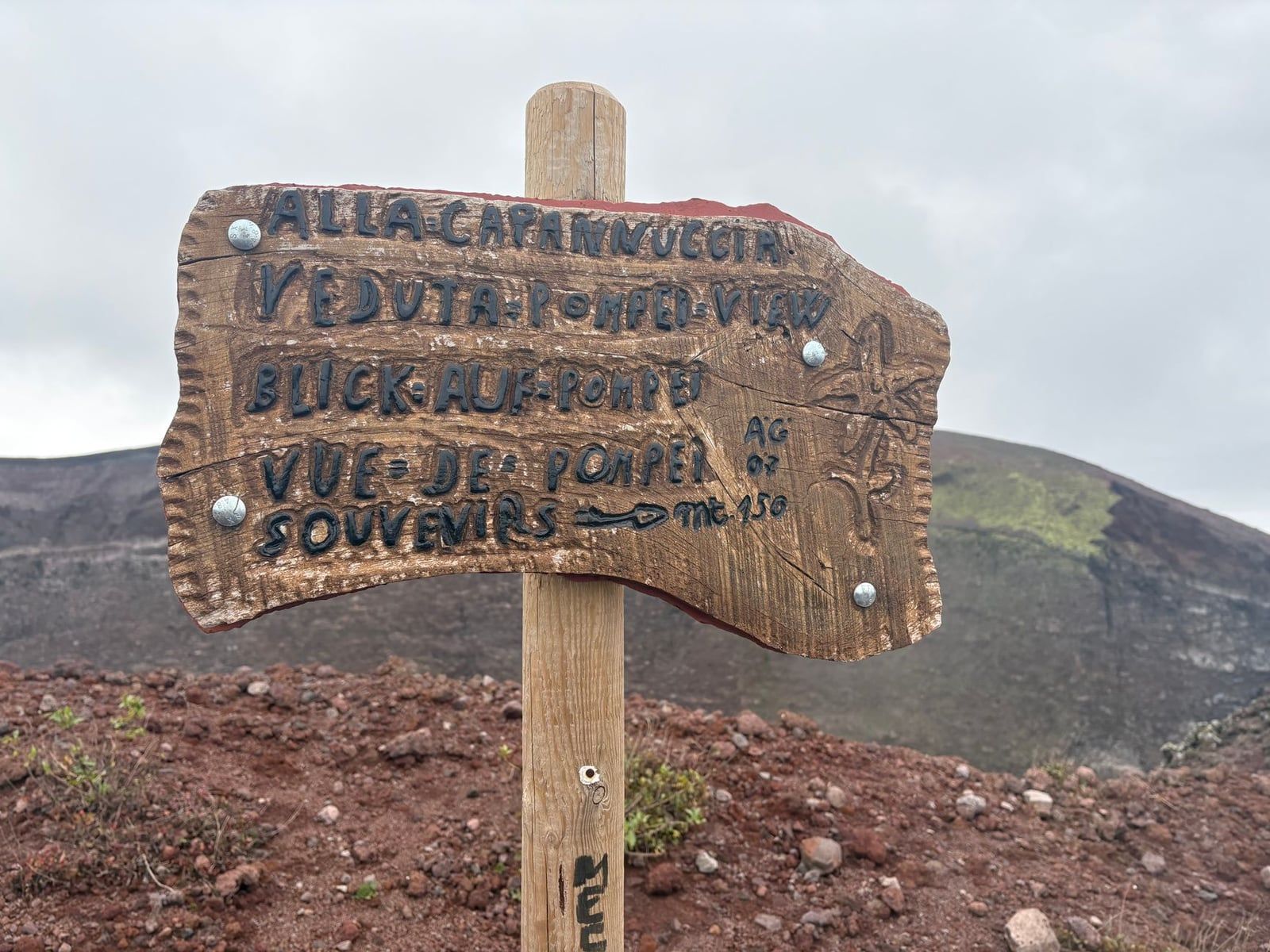
The first 800 metres are the hard part: tight switchbacks on loose grey gravel, no shade, nowhere to sit. After that the gradient eases and the path curves along the outer rim on firmer ground. About halfway up there's a small souvenir stall and guide office where you can rent a walking stick for a few euros; near the top, rangers give a short five- to ten-minute talk about the crater before you're free to walk the open stretch of rim.
The view is the reason to come. Look down and it's 300 metres to the crater floor across a 450-metre-wide bowl of jagged rock, with wisps of sulfurous steam still rising from fumaroles near the vent. Turn around and, on a clear day, the Bay of Naples spreads out below with the Sorrentine Peninsula, and Capri and Ischia sitting out in the Tyrrhenian Sea. You can't walk the full rim — the northern and eastern sections stay closed for safety — so the trail is out and back, not a loop; you retrace your steps to the gate. For more on how the volcano got this shape, see our overview of Mount Vesuvius.
Beyond Gran Cono: The Other 10 Trails in Vesuvius National Park
Ten more trails fan out across the park, ranging from a flat kilometre near the Observatory to a seven-hour ridge trek, and none of them need a ticket.
Longer, harder trails for a full day
Five routes are built for people who want more than the crater view. The Valle dell'Inferno (Valley of Hell) covers 12 km from Ottaviano in about seven hours, rated difficult. The Cognoli ridge trail, also starting in Ottaviano, runs a similarly tough 11.5 km. The Mount Somma loop climbs to Punta Nasone at 1,132 metres — the old volcano's highest point — over 9 km and 5.5 hours, threading past lava flows from the 1944 eruption. The Tirone Reserve trail cuts 11 km through pine forest from Ercolano in about six hours, and the Matrone Road, at 14 km and seven hours, is generally the most scenic of the long routes.
Shorter, easier trails and family options
Five more stay under half a day. The Profica Valley walk is 4.5 km and about three hours, passing fields once used to grow the local piennolo cherry tomatoes. The Old Rack Railway trail is a short, easy-to-moderate 3 km, though it's sometimes closed. A 1-km Lava Flow path starts right at the Vesuvius Observatory and suits families with young kids. The Olivella trail covers 3.7 km in around 2.5 hours, also subject to periodic closure. And the Terzigno Pine Forest trail — flat, 1.5 km — is the only fully wheelchair-accessible route in the park.
Several of these — the Cognoli, Mount Somma, Rack Railway and Olivella routes among them — close on and off for maintenance or weather. Check the official park site before you build a day around one, and note that these ten are largely separate outings from Gran Cono; combining one with a Pompeii day trip usually isn't realistic on time alone.
How Hard Is It? Difficulty, Fitness & Accessibility
Ratings for Gran Cono are all over the place because two different audiences are describing two different experiences. Most tour operators and travel bloggers call it easy, achievable by kids and grandparents with average fitness. Independent Italian guides tend to rate it moderate to high, because the first 800 metres are steep, loose volcanic gravel with no shade and nowhere to rest. Both are right. It's a short hike, and also a genuine uphill slog for anyone who doesn't hike often.
In practice, a healthy adult manages it in under an hour each way; people in their sixties and seventies routinely finish in around 45 minutes with a couple of stops. Bring water, take it slow on the switchbacks, and you'll be fine. Families with small children or grandparents with mobility issues should stick to Gran Cono or the 1-km Lava Flow path near the Observatory, rather than the Valley of Hell or Matrone Road, which stay exposed and unshaded for hours at a stretch.
Wheelchair users have made it to the crater rim with assistance, since the trail has no stairs, but the surface is loose ash and gravel throughout and standard wheelchairs will struggle without help or a motorized option. Disabled visitors and one accompanying carer get free park entry with valid ID, though you'll still need to book a ticket. For a genuinely flat route, the Terzigno Pine Forest trail is the park's only fully wheelchair-accessible option — worth the detour if mobility is a real constraint.
Tickets, Prices, Hours & Booking Rules
The standard Gran Cono ticket costs €10.00, or €11.68 once the mandatory online booking fee is added; the reduced rate is €8.00 (€9.55 with the fee) for visitors under 25 and residents of the park's 13 municipalities. Children under six go free with a parent, as do disabled visitors and one carer — but everyone, including free-entry categories, needs a dated ticket. There's no ticket office at the gate: booking happens online in advance, and arriving without one means being turned away.
The park caps entry at 360 hikers per hour, which works out to daily limits between roughly 2,160 visitors in winter and 3,240 in July and August. Popular summer slots sell out days ahead, so book as soon as your dates are fixed — reservations open up to 30 days out. If everything's sold out, about a fifth of each day's tickets are held back and released roughly an hour before each time slot, so checking that morning is worth a shot.
| Months | Gate Opens | Last Entry |
|---|---|---|
| Jan, Feb, Nov, Dec | 9:00 am | 3:00 pm |
| March, October | 9:00 am | 4:00 pm |
| Apr-Jun, September | 9:00 am | 5:00 pm |
| July, August | 9:00 am | 6:00 pm |
Entry is allowed from 40 minutes before your slot to 120 minutes after it, and you'll need to be off the trail within an hour of the last entry time. Gates can close early, or all day, if regional Civil Protection issues an orange weather alert — high wind, heavy rain or snow makes the ash surface genuinely dangerous. Check the current hours and fees before you travel, since the schedule shifts with the seasons. One more thing: your ticket only covers Gran Cono. The other ten trails are free and don't need this booking at all.
Getting to the Trailhead: Train, Car, Shuttle or Tour
No road runs to the trailhead gate itself, so most independent hikers combine a train with a shuttle. Take the Circumvesuviana line from Naples' Piazza Garibaldi toward Sorrento and get off at Ercolano Scavi (about 20-30 minutes, a few euros). From there, the Vesuvio Express shuttle bus climbs to the Piazzale Quota 1000 trailhead in around 20 minutes; a round-trip shuttle ticket runs roughly €20, and some versions bundle in crater entry. See our full directions and transport options before you set out.
From Pompeii or Sorrento, EAV Bus No. 808 runs from Pompei Villa dei Misteri station up to the same trailhead area, roughly 55-70 minutes depending on traffic, with buses spaced 60-120 minutes apart. Check the timetable so you're not left waiting.
Driving works too, but private cars can't park at Piazzale Quota 1000 itself; you'll use one of the municipality-managed lots along the Strada Provinciale Ercolano-Vesuvio and either walk the rest or catch a shuttle. Tour vans and coaches get their own closer parking, one of the real perks of booking a tour if you're short on time or hiking with anyone who struggles with extra walking.
Ercolano Scavi station, the same stop for the train-and-shuttle route, also serves the ruins of Herculaneum, so a volcano-then-ruins day strings together without backtracking. Several operators run Vesuvius and Herculaneum tours from Naples that handle both legs in one coach.
Best Time to Hike, What to Pack & Safety Tips
May, June and September hit the sweet spot: mild temperatures, wildflowers (yellow broom and purple valerian) along the lower slopes, and thinner crowds than midsummer. July and August are hot, exposed and busy — the daily visitor cap actually rises to 3,240 in peak season because demand is highest then. Winter, December to February, has the shortest hours, closing at 3 pm, and the trail can shut altogether after snow, high wind or heavy rain, since wet volcanic ash turns slippery fast. Whatever the season, arrive at the 9 am opening if you can — clearer views, cooler air, and you'll beat the tour buses that show up by midday.
- Closed-toe shoes with grip — no sandals
- 1.5 litres of water minimum
- Hat, sunscreen and sunglasses
- A light windbreaker for the exposed rim
- Cash for the trailhead stall and walking-stick rental
There's not much up there once you're through the gate: portable toilets near the entrance, a small coffee and souvenir stall about halfway, and no real food beyond snacks and drinks at inflated summit prices. Walking sticks are available to rent, not free despite how they're handed out, at the trailhead — a few euros gets you a wooden stick for the descent.
Vesuvius last erupted in March 1944 and has gone off roughly three dozen times since 79 AD; today it's watched around the clock by the Vesuvius Observatory, the world's oldest volcano-monitoring institute, founded in 1841. The mountain is dormant, not extinct, but the real risks on a hiking day are mundane: slipping on loose gravel and heat exhaustion in summer, not the volcano itself. Skip the trail if you can't see the summit from the base — a cloud-covered crater means a wasted climb and a much thinner view at the top.
Guided Tour or Independent Hike — And Pairing It With Pompeii
Go independent if you're comfortable with public transport, want to set your own pace, and don't mind booking your entry ticket 30 days out yourself. The train-shuttle combo from Naples costs a fraction of a tour and gives you full control over timing.
Book a tour if you're visiting in July or August when slots vanish fast, want transport and tickets bundled into one booking, or you're stacking Pompeii into the same day and don't want to manage two sets of train connections. A Vesuvius and Pompeii tour from Naples or a Vesuvius and Pompeii tour from Sorrento handles the transfers for you, and tour vehicles get closer parking than anyone driving themselves.
Budget 1.5-2 hours on the mountain itself, plus transit time either side. A Vesuvius-only outing from Naples fits into a half day; a combined Pompeii and Vesuvius day typically runs 6-8 hours door to door once you add the ruins, lunch and the return trip. To compare every option before booking, see our full list of Vesuvius tours.
Frequently asked questions
How long does it take to hike Mount Vesuvius?
The Gran Cono crater trail is about 3 km round trip and takes 1-2 hours; park rules cap it at two hours. Add photo stops and the short ranger talk at the rim and plan for close to two hours total on the mountain.
Is hiking Mount Vesuvius hard?
Ratings differ. Most tour operators and bloggers call it easy, achievable by kids and grandparents with average fitness. Independent Italian guides rate it moderate to high because the first 800 metres are steep, loose gravel with no shade or seating. Expect a real uphill effort early on, then an easier stretch to the rim.
Do I need to book Mount Vesuvius tickets in advance?
Yes. Entry to the Gran Cono trail is timed and must be booked online, up to 30 days ahead — there's no ticket office at the gate. Standard price is €10.00 (€11.68 with the booking fee), reduced €8.00 (€9.55 with the fee), and children under six enter free.
Can I hike Mount Vesuvius without a guided tour?
Yes. Take the Circumvesuviana train from Naples to Ercolano Scavi, then the Vesuvio Express shuttle bus up to the Piazzale Quota 1000 trailhead — a round trip runs around €20 for the shuttle. You'll still need a pre-booked entry ticket for Gran Cono either way.
Are there other trails besides the crater path?
Yes. Vesuvius National Park has 11 official trails covering 54 km in total, from a 1-km family-friendly walk near the Observatory to a 14-km, seven-hour trek along the Matrone Road. Several of the ten alternative trails close periodically for maintenance or weather, so check the official park site before planning a day around one.
What should I wear to hike Mount Vesuvius?
Sturdy closed-toe shoes with real grip — sandals let volcanic gravel straight in. Bring at least 1.5 litres of water, sun protection, and a light windbreaker, since the crater rim sits over 1,000 metres up and catches wind even in summer.
Is Mount Vesuvius dangerous to visit today?
The volcano is monitored around the clock by the Vesuvius Observatory and hasn't erupted since March 1944. It's considered safe to visit; the practical risks on a hiking day are slipping on loose gravel or heat exhaustion, not volcanic activity.
Can you walk all the way around the crater rim?
No. Only a limited stretch of the rim is open — the northern and eastern sections are closed for safety. The Gran Cono trail is out and back, not a loop, so you retrace your steps to the gate rather than circling the crater.
Sources
- parconazionaledelvesuvio.it/en/visit-the-park
- parconazionaledelvesuvio.it/en/the-volcano/geology-and-vulcanology
- en.wikipedia.org/wiki/Mount_Vesuvius
- en.wikipedia.org/wiki/Eruption_of_Mount_Vesuvius_in_79_AD
- protezionecivile.gov.it/en/approfondimento/national-civil-protection-plan-volcan
- iononrischio.gov.it/en/get-ready/volcanoes/vesuvius/what-know